Hidden Risks of Unmanaged API Access in Multi-Cloud

June 10, 2026
Key Takeaways
- Unmanaged API access is one of the quietest risks in multi-cloud environments because traffic often looks legitimate until an incident occurs.
- The biggest risks include shadow APIs, inconsistent identity, over-permissive service credentials, weak rate limits, missing audit trails, and fragmented policy enforcement.
- Multi-cloud makes API access harder to control because APIs span clouds, regions, clusters, SaaS platforms, and on-premises systems.
- Zero trust principles apply directly to API access: verify every request, scope every identity, and avoid trusting network location alone.
- Apache APISIX and API7 help centralize authentication, routing, rate limiting, request validation, logging, and policy governance across distributed API estates.
- API access governance works best when teams combine inventory, ownership, route-level policy, observability, and lifecycle controls.
Multi-cloud architecture gives engineering teams flexibility. Workloads can run where latency, cost, compliance, and platform capabilities make the most sense. A customer-facing application may use one public cloud for Kubernetes, another for analytics, SaaS tools for business operations, and on-premises systems for legacy data. This flexibility is useful, but it also creates a hard security problem: API access becomes scattered across many environments.
The danger is not always a dramatic breach. In many organizations, the more common problem is unmanaged API access. A service account can call more APIs than it needs. A legacy endpoint remains reachable after a migration. A partner integration bypasses the standard gateway. A cloud function uses a long-lived token stored in configuration. A team exposes an internal API for debugging and forgets to remove it. Each issue may look small, but together they create a large attack surface.
In a single-cloud environment, teams may already struggle to answer basic questions: Which APIs exist? Who owns them? Which identities can call them? Which routes expose sensitive data? Which APIs have quotas? Which ones are logged? In multi-cloud, those questions become harder because each environment has its own identity model, network controls, logging tools, and deployment process.
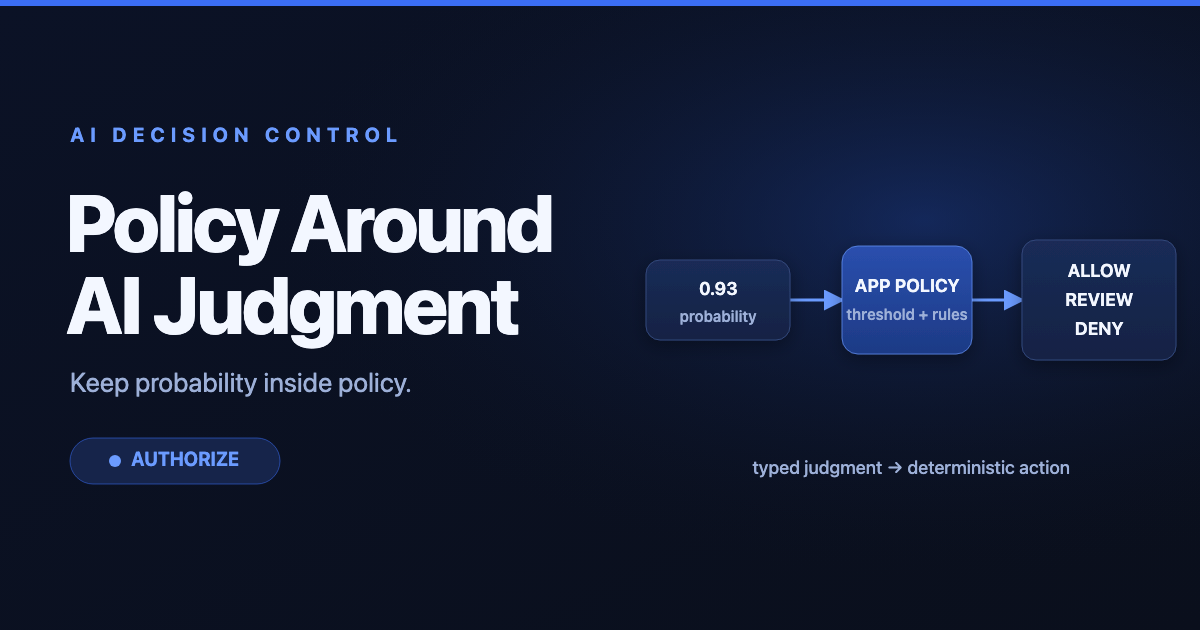
The hidden risk is that an API call can be both valid and unsafe. A request may come from an authenticated service, use a known route, and return a successful response, while still violating least privilege, data minimization, or traffic governance expectations. That is why unmanaged API access requires more than perimeter security. It requires API-level governance and a clear API security strategy.
What Is Unmanaged API Access?
Unmanaged API access happens when an organization cannot consistently control, observe, and audit who or what can call its APIs. It is not limited to public APIs. Internal service-to-service APIs, partner APIs, cloud management APIs, admin APIs, webhooks, event callbacks, and AI tool APIs can all become unmanaged.
In multi-cloud systems, unmanaged access usually appears in several patterns.
First, APIs are deployed outside standard gateways. A team may expose a cloud load balancer directly because it is faster than onboarding to the platform. Another team may create a temporary endpoint for migration. A SaaS integration may use a webhook endpoint that was never added to the central inventory. These APIs may work correctly, but they bypass shared controls.
Second, identities are inconsistent. Cloud A may use one IAM system, cloud B another, Kubernetes another, and SaaS tools yet another. If those identities are not mapped to API ownership and permissions, teams cannot easily enforce least privilege.
Third, credentials become too broad or too long-lived. A service token created for one integration may be reused by another. A partner credential may keep access after the project ends. A developer token may appear in a CI variable and remain active for years.
Fourth, traffic policy is missing. APIs without rate limits, payload validation, or timeout policies are vulnerable to accidental overload and deliberate abuse. In multi-cloud, one noisy consumer can affect shared backend systems across environments.
flowchart LR
    Client[Apps, partners, services, and jobs]
    Direct[Direct cloud endpoint]
    Gateway[Managed API gateway]
    CloudA[Cloud A services]
    CloudB[Cloud B services]
    SaaS[SaaS APIs and webhooks]
    Legacy[On-prem or legacy systems]
    Logs[Unified audit and metrics]

    Client --> Direct
    Client --> Gateway
    Direct --> CloudA
    Direct --> CloudB
    Gateway --> CloudA
    Gateway --> CloudB
    Gateway --> SaaS
    Gateway --> Legacy
    Gateway --> Logs
The direct endpoint path is where risk grows. It may not be malicious. It may simply be ungoverned. But if the organization cannot apply consistent policy to that path, the API becomes harder to secure and harder to operate.
Risk 1: Shadow APIs and Unknown Attack Surface
Shadow APIs are APIs that exist outside central visibility. They may be undocumented, unowned, deprecated, experimental, or exposed by infrastructure teams for internal use. In multi-cloud environments, shadow APIs multiply because each platform makes it easy to create endpoints.
The risk is simple: you cannot protect what you cannot see. If an API is missing from the inventory, it may also be missing authentication requirements, rate limits, request validation, logging, and vulnerability review. If it is missing an owner, no one knows when to patch it, deprecate it, or investigate unusual traffic.
Shadow APIs often appear during migrations. For example, a team moving from an on-premises system to cloud may temporarily expose an adapter API. Another team builds against that adapter. The temporary API becomes permanent, but it never goes through the same governance path as official APIs. Months later, it may still expose sensitive data through an old schema.
A practical API inventory should include:
- API name and business purpose.
- Owner and escalation contact.
- Environment, cloud, region, and gateway route.
- Authentication method and authorization model.
- Data classification.
- Consumers and partner dependencies.
- Rate limits and traffic expectations.
- Deprecation status and version policy.
Apache APISIX can help by making routes, upstreams, plugins, and consumers explicit. API7 can help platform teams manage API assets and policy across environments. The goal is not bureaucracy for its own sake. The goal is to make API access visible enough to govern.
Risk 2: Inconsistent Identity and Authorization
NIST's Zero Trust Architecture guidance emphasizes that access decisions should not rely on network location alone. That principle is especially important for APIs. In a multi-cloud environment, a request may come from a private subnet, a Kubernetes cluster, a serverless function, or a SaaS connector. None of those locations should automatically imply trust.
API access needs identity. The gateway or service should know which application, service, user, partner, tenant, or automation is making the request. That identity should be scoped to the routes and actions required for the use case.
The common failure is coarse-grained authorization. A service account gets broad access to many internal APIs because it is easier than managing route-specific permissions. A partner gets a single token that can call all endpoints for a product. A CI job can call production APIs because staging and production credentials were not separated. These shortcuts create blast radius.
sequenceDiagram
    participant Caller as Service or Partner
    participant GW as API Gateway
    participant IdP as Identity Provider
    participant Policy as Access Policy
    participant API as Backend API
    participant Audit as Audit Trail

    Caller->>GW: Send API request with credential
    GW->>IdP: Validate token, key, mTLS identity, or OIDC context
    IdP-->>GW: Return verified identity and claims
    GW->>Policy: Check route, scope, tenant, quota, and environment
    Policy-->>GW: Allow or deny
    GW->>API: Forward approved request
    GW->>Audit: Record identity, route, decision, and latency
This model separates authentication from authorization. Authentication proves who is calling. Authorization determines what the caller can do. For sensitive APIs, backend services should still enforce domain-level authorization, such as whether the caller can access a specific customer, policy, account, or tenant.
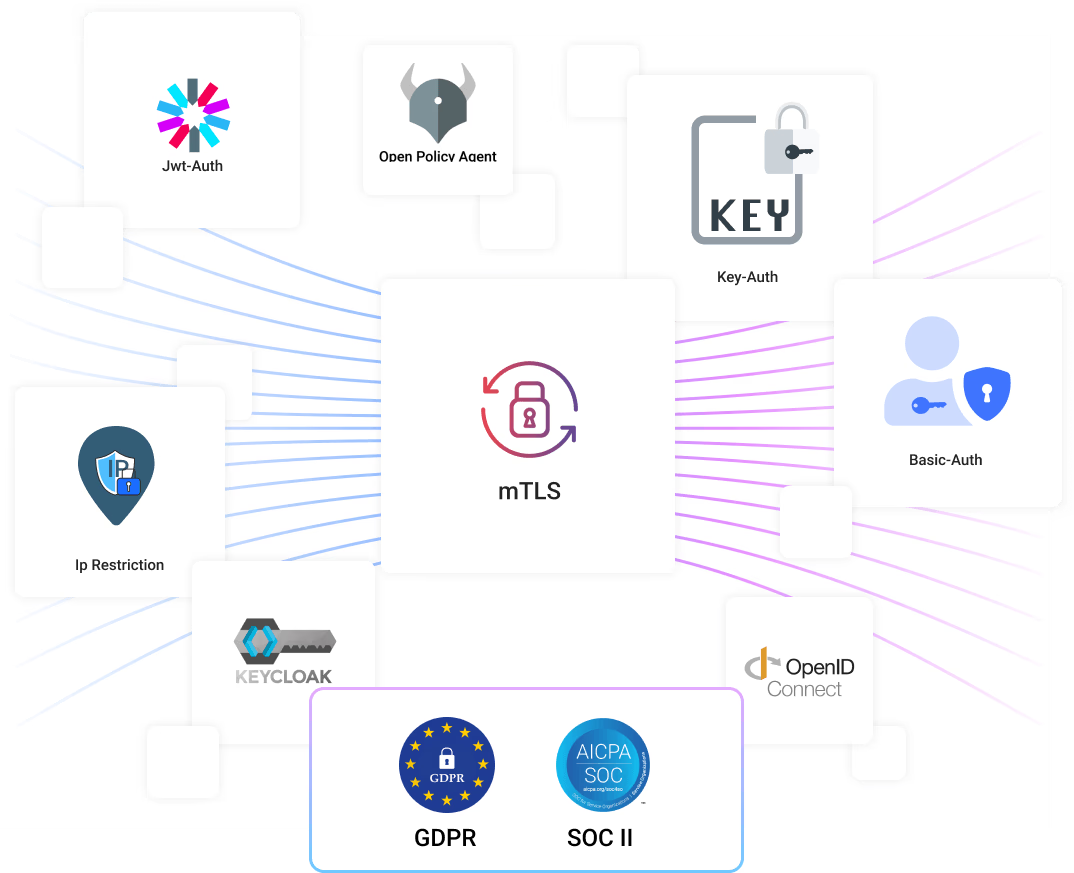
With APISIX, teams can apply authentication plugins such as key authentication, JWT, OpenID Connect, or mTLS-related patterns depending on the environment. The important part is consistency: API access should not depend on whichever identity scheme a single cloud team happened to use first. API7's guide to API authentication and authorization covers the foundation for this model.
Risk 3: No Traffic Governance Across Clouds
Unmanaged API access is not only a security risk. It is also a reliability risk. APIs without traffic governance can overload downstream systems, increase cloud cost, and make failures harder to contain.
In multi-cloud systems, traffic paths are often long and uneven. A service in cloud A may call a service in cloud B, which then calls an on-premises database. A partner API may reach a gateway in one region and a backend in another. If one consumer retries aggressively during an outage, traffic can spike across multiple environments.
Rate limiting and quotas provide a basic safety layer. They prevent one caller from consuming unlimited resources. Request validation blocks malformed payloads before they hit backend services. Timeout policies prevent slow upstreams from tying up connections indefinitely. Circuit-breaking and health-aware routing can reduce failure amplification. For implementation patterns, see API7's guide to rate limiting in API management.
Here is a simplified APISIX route for a multi-cloud customer API. It authenticates callers, applies a per-consumer quota, and routes to a managed upstream.
curl -i "http://127.0.0.1:9180/apisix/admin/routes/customer-profile" \
  -H "X-API-KEY: ${APISIX_ADMIN_KEY}" \
  -X PUT -d '
{
  "name": "customer-profile",
  "uri": "/customers/v1/profile/*",
  "upstream": {
    "type": "roundrobin",
    "nodes": {
      "customer-api.cloud-a.internal:8080": 1,
      "customer-api.cloud-b.internal:8080": 1
    },
    "timeout": {
      "connect": 3,
      "send": 10,
      "read": 10
    }
  },
  "plugins": {
    "key-auth": {},
    "limit-count": {
      "count": 1000,
      "time_window": 60,
      "rejected_code": 429,
      "key_type": "var",
      "key": "consumer_name"
    }
  }
}'
This example is intentionally simple, but the pattern matters. The route becomes a governed entry point. Every caller must authenticate. Every caller is subject to quota. Every upstream has timeout boundaries. That is much safer than allowing unmanaged direct access to each cloud service.
Risk 4: Missing Audit Trails and Incident Context
When an incident happens, the first questions are rarely theoretical. Teams need to know which identity called which API, from where, how often, with what response, and whether the behavior was normal.
Unmanaged API access makes those questions hard to answer. Logs may be split across cloud providers. Some APIs may log only application errors, not access decisions. Some gateways may emit metrics without consumer identity. SaaS webhooks may not share the same request ID format. On-premises systems may have different log retention.
API governance should define a minimum audit record for every managed route:
- Request ID or trace ID.
- API route and upstream target.
- Consumer identity and authentication result.
- Authorization decision.
- HTTP method, status code, and latency.
- Rate-limit or quota decision.
- Environment, region, and gateway instance.
- Error category without storing sensitive payloads unnecessarily.
Observability is not only for debugging. It is part of access governance. If a service starts calling a new API, the platform should notice. If a partner suddenly hits quota, the business owner should know. If an internal API receives requests from an unexpected environment, the security team should investigate.
flowchart TD
    APIRequest[API request]
    Gateway[Gateway policy decision]
    Metrics[Metrics]
    Logs[Structured logs]
    Traces[Distributed traces]
    Alert[Security or reliability alert]
    Review[Owner review and remediation]

    APIRequest --> Gateway
    Gateway --> Metrics
    Gateway --> Logs
    Gateway --> Traces
    Metrics --> Alert
    Logs --> Alert
    Traces --> Alert
    Alert --> Review
API7 and APISIX can provide the gateway-level signals needed for this model. Backend systems should complement those signals with business context, but the gateway is the most reliable place to observe traffic across many APIs. API7's gateway logging best practices offer a practical starting point for standardizing those signals.
How to Govern API Access in Multi-Cloud
Start with inventory. Discover APIs across gateways, cloud load balancers, Kubernetes ingress resources, serverless endpoints, SaaS webhooks, and legacy systems. Prioritize APIs that expose customer data, payment flows, admin operations, or partner integrations.
Next, define ownership. Every API should have an owner who understands its consumers, data sensitivity, version lifecycle, and operational requirements. Unknown ownership is a governance smell.
Then standardize entry points. Sensitive APIs should not be reachable through unmanaged direct paths. Route them through a gateway where shared policy can be enforced. In some architectures, that means a central edge gateway plus regional gateways. In others, it means domain-specific gateways with common policy templates.
After that, enforce identity and least privilege. Avoid shared credentials. Give each service, partner, or automation its own identity. Map identities to route-level permissions. Separate staging and production. Rotate credentials and remove inactive consumers.
Finally, make traffic policy and observability default. Require rate limits, timeouts, request IDs, logs, and dashboards for production APIs. Treat missing metrics as a launch blocker, not an afterthought.
A simple readiness checklist can help:
multi_cloud_api_access:
  inventory:
    owner_defined: true
    data_classification_defined: true
    consumers_known: true
  security:
    authentication_required: true
    route_level_authorization: true
    shared_credentials_removed: true
  traffic:
    rate_limits_configured: true
    timeouts_configured: true
    validation_configured_for_sensitive_routes: true
  observability:
    request_id_logged: true
    consumer_identity_logged: true
    alerts_for_unusual_usage: true
This checklist is deliberately practical. Multi-cloud governance fails when policy is too abstract. Teams need specific controls they can apply to every route.
Conclusion
Unmanaged API access is dangerous because it hides in normal operations. APIs work, integrations ship, and traffic flows until a credential is abused, a shadow endpoint is exposed, or a retry storm hits a fragile backend. Multi-cloud increases that risk by spreading APIs across different identity systems, gateways, regions, and teams.
The solution is not to avoid multi-cloud. The solution is to make API access governable. Use inventory to find APIs, ownership to make them accountable, identity to scope access, gateway policy to enforce controls, and observability to detect drift.
Apache APISIX and API7 help teams build that control layer across distributed environments. By routing APIs through managed gateways, applying authentication and traffic policies, and collecting consistent logs, organizations can reduce the hidden risks of unmanaged API access while still giving teams the flexibility multi-cloud promises.