Speculative Decoding Changes AI Gateway Capacity Planning

September 8, 2026
Speculative decoding is moving from a research technique into a practical serving option. A recent vLLM study of speculative decoding on AMD GPUs drew an active Hacker News discussion and showed why that transition deserves attention: draft-and-verify decoding can improve output-token throughput, but the gain varies by model, draft method, proposal length, and workload.
That variability changes how platform teams should operate an AI service. A model name and GPU type are no longer enough to describe backend capacity. Two endpoints serving the same target model can have different latency curves, memory headroom, and useful concurrency depending on their speculative configuration.
An AI Gateway should not try to implement the decoder. Its role is to preserve a stable client contract while routing traffic to compatible inference pools, attaching workload identity, enforcing limits, and measuring the end-to-end behavior that users actually experience.
Key Takeaways
- Speculative decoding uses a draft component to propose tokens and the target model to verify them; accepted tokens preserve the target model's output behavior.
- More proposed tokens do not automatically mean more throughput. Draft cost, verification cost, acceptance behavior, memory, and workload shape all matter.
- Capacity planning should use end-to-end request metrics together with backend acceptance and GPU metrics.
- Stable gateway aliases let teams test or roll out speculative backends without changing every client.
- Routing must remain explicit: the gateway can select an eligible pool, but it cannot infer compatibility or guarantee a speedup from the model name alone.
What Speculative Decoding Actually Changes
Autoregressive generation normally commits one output token per decode step. Speculative decoding adds a proposal stage. A smaller model, an auxiliary prediction head, or another draft network proposes several candidate tokens. The target model evaluates those positions together, accepts a valid prefix, and supplies the replacement at the first rejected position.
The target model still decides what is committed. Speculation aims to reduce the number of expensive target-model decode rounds, not to substitute an unverified answer from a cheaper model.
The mechanism introduces new operational variables:
| Variable | Why it matters |
|---|---|
| Draft method | Native MTP, a paired assistant, or a dedicated network has different compute and memory costs |
| Proposal length | A longer proposal may save target steps or waste draft and verification work |
| Acceptance behavior | Workloads with predictable continuations may accept more draft tokens |
| GPU memory | Separate draft weights and runtime buffers reduce capacity available for KV cache or concurrency |
| Request shape | Prompt length, output length, sampling, language, and task type change the useful setting |
This is why a benchmark maximum should not become a universal production promise. In the vLLM experiments, the best measured ratio and proposal length changed across model families and datasets. Some tested configurations improved substantially; at least one measured combination remained below the autoregressive baseline.
Why Gateway Metrics Must Go Beyond Tokens per Second
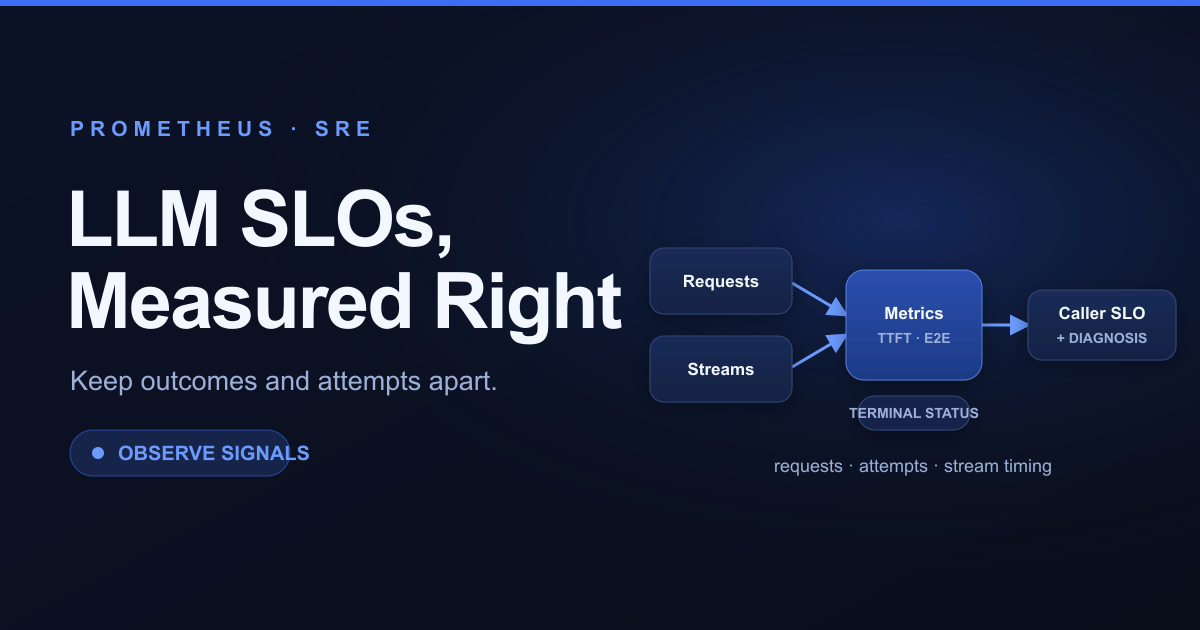
Tokens per second is useful, but it does not describe the client experience by itself. A platform team also needs time to first token, inter-token latency, total request latency, queue time, error rate, and concurrency. A backend can generate tokens quickly after admission while users still wait in a long queue.
Speculative decoding adds backend-only signals such as mean accepted length, overall acceptance rate, per-position acceptance rate, draft latency, verification latency, and memory use. These explain why a pool behaves as it does. They should be correlated with gateway-side dimensions that the inference server may not know:
- caller, application, team, and tenant;
- model alias and selected backend pool;
- endpoint and streaming mode;
- prompt and completion token counts;
- status, queue time, time to first token, and total latency;
- rate-limit or policy outcome.
The existing API7 guide to AI Gateway observability explains the value of joining provider and business context. Speculative decoding makes that join more important. Acceptance rate without a workload identity is difficult to act on, while gateway latency without decoder telemetry cannot explain why a new backend configuration regressed.
Use trace or request identifiers to correlate both layers. Avoid putting raw prompts into high-cardinality metric labels. If representative content is needed for performance analysis, collect it through a separately approved, access-controlled sampling process.
Treat Each Speculative Configuration as a Capacity Profile
Capacity models often assume that one replica of model X on GPU Y has a single requests-per-second value. Speculation makes that assumption especially fragile.
Create a capacity profile for each deployable combination:
target model
+ tokenizer and chat template
+ inference runtime version
+ draft method and checkpoint
+ proposal length
+ quantization and parallelism
+ GPU type and memory
+ representative workload
= one measured capacity profile
Measure at several concurrency levels. A configuration that helps a single long generation may not help a highly batched service. Record memory headroom as well as throughput, because loading a separate draft checkpoint can reduce the number of concurrent sequences that fit.
Keep a non-speculative baseline. The baseline is both the control for an experiment and a practical rollback target. When the draft checkpoint, target model, tokenizer, or runtime changes, treat the result as a new profile rather than inheriting old numbers.
Use Gateway Aliases for Safe Rollouts
Applications should not need to know whether a backend uses native MTP, EAGLE-3, DFlash, another method, or no speculation. They should call a stable model alias whose contract covers the model family, endpoint semantics, region, data policy, and service objective.
Behind that alias, the platform can expose separate pools:
flowchart LR
    A[Applications] -->|stable model alias| G[AI Gateway]
    G -->|control cohort| B[Autoregressive pool]
    G -->|eligible cohort| S[Speculative pool]
    B --> T[Target model]
    S --> T
    G --> O[Gateway latency and usage]
    S --> M[Acceptance and GPU metrics]
Start with a small, explicit cohort. Compare like with like: same model contract, representative prompts, similar concurrency, and the same client timeout. Increase traffic only after the speculative pool meets the relevant service objective.
AI Gateway load balancing is useful here, but compatibility must come before utilization. Do not send a request to a pool merely because it has spare GPUs. The pool must support the requested model alias, endpoint, context length, sampling controls, streaming behavior, and policy requirements.
Routing Should Use Measured Eligibility, Not Decoder Hype
Speculative decoding is workload-sensitive, so routing every request to the speculative pool can erase its benefit. A safer design uses two stages.
First, determine eligibility from stable facts: approved model alias, endpoint, region, context limits, streaming support, and tenant policy. Then choose among eligible pools using observed health, queue depth, and service-level signals.
Workload-aware routing can be added only when it is explainable and measured. For example, a code-completion workload may show strong acceptance for a matched draft checkpoint, while a highly diverse creative workload may not. That conclusion should come from representative tests, not a broad assumption about the content category.
Avoid routing on raw acceptance rate alone. vLLM's guidance notes that high acceptance does not necessarily produce high throughput when drafting overhead is expensive. Conversely, a lower acceptance rate can still be useful if proposals are cheap. End-to-end performance remains the deciding signal.
Control Cost and Reliability at the Same Boundary
Faster decoding can lower the GPU time needed for a successful request, but it can also introduce another checkpoint, more memory pressure, and additional operational work. Financial reporting should therefore connect request volume and token usage to the measured infrastructure profile, not assume a fixed saving.
At the gateway, keep the ordinary controls:
- authenticate every caller;
- apply request, token, and concurrency limits at appropriate scopes;
- preserve upstream credentials outside applications;
- reject unsupported models or request shapes before they consume GPU capacity;
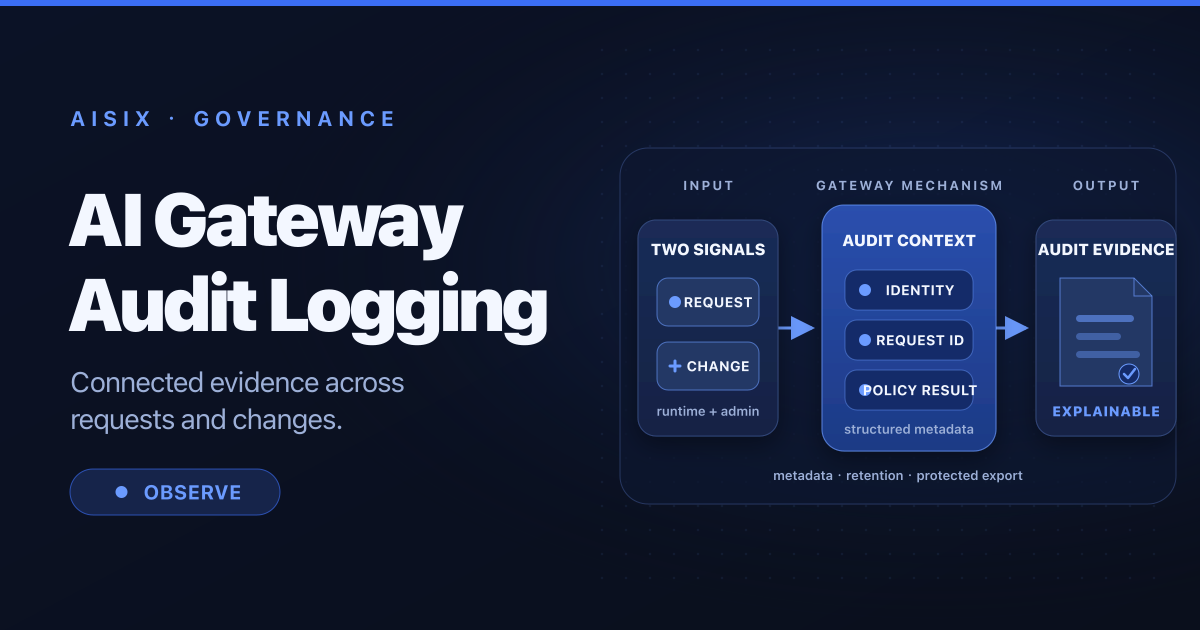
- export auditable routing and policy decisions;
- use bounded retries and test their effect on duplicate work.
These controls are complementary to decoder tuning. AISIX AI Gateway can provide the client-facing alias, policy, and telemetry boundary, while vLLM or another inference runtime owns draft-and-verify execution and its specialized metrics.
A Practical Evaluation Checklist
Before enabling speculative decoding for production traffic, verify:
- Is the draft method supported by the exact runtime and target model?
- Does a separate draft checkpoint match the tokenizer, architecture, and target version?
- How much GPU memory remains for KV cache and concurrent requests?
- Which proposal lengths were tested with representative production prompts?
- Are time to first token, total latency, throughput, and queue time all improved at target concurrency?
- Can gateway request IDs be correlated with backend acceptance and GPU metrics?
- Is a non-speculative pool available for comparison and rollback?
- Does routing enforce model, endpoint, region, and policy compatibility before load balancing?
- Are canary thresholds and rollback conditions documented?
- Are cost claims based on measured GPU time and utilization rather than a benchmark headline?
Conclusion
Speculative decoding can be a meaningful inference optimization, but it turns capacity into a workload-specific property. The correct proposal length is not necessarily the longest one, and the highest acceptance rate is not necessarily the fastest configuration.
Platform teams need two views at once: decoder telemetry that explains draft-and-verify behavior, and gateway telemetry that explains who called which alias and what latency, reliability, policy, and cost users experienced. A stable gateway boundary makes it possible to canary, compare, route, and roll back speculative pools without exporting backend complexity to every application.
If you are introducing speculative inference, begin with representative traffic and a measurable baseline. Then use AISIX AI Gateway to keep the client contract, access policy, and operational evidence consistent while the serving layer evolves.