Multimodal AI Gateway for Image, Audio, and Video

September 8, 2026
Moving from text to multimodal AI changes more than the prompt. An application may send a JSON image-generation request, upload an audio file as multipart data, receive synthesized speech as binary bytes, keep a WebSocket open for a realtime conversation, and poll an asynchronous video task until a large file is ready.
A multimodal AI gateway gives those workloads a shared entry point for caller identity, model aliases, provider credentials, traffic policy, and telemetry. It should not pretend that every media API has the same protocol, lifecycle, safety model, or billing unit.
The goal is consistent governance with explicit endpoint differences.
Key Takeaways
- Multimodal traffic includes JSON, multipart uploads, binary responses, WebSockets, and asynchronous jobs—not one universal request shape.
- A provider that supports OpenAI-compatible chat does not automatically support compatible image, audio, video, or realtime endpoints.
- Input prompts and metadata can be inspected at the gateway, but generated media bytes may need a separate media-safety pipeline.
- Tokens are not a universal cost unit. Image size and quality, audio duration, video seconds, concurrency, storage, and egress can all matter.
- AISIX AI Gateway exposes documented image, audio, video, and realtime paths while keeping provider compatibility explicit.
Multimodal Traffic Is More Than a Bigger Prompt
A multimodal model can accept or produce more than one media type. A multi-model gateway, by contrast, routes among several models or providers. The two ideas can overlap, but they are not synonyms.
The distinction matters operationally. A multimodal application can move large inputs, return binary content, hold bidirectional sessions open, or create provider-side resources that outlive the original HTTP request.
| Workload | Common transport | Lifecycle | Important control |
|---|---|---|---|
| Image generation | JSON request, JSON response with URL or base64 | synchronous request | prompt policy, model access, result handling |
| Image editing | multipart image plus prompt | synchronous request | upload size, media type, prompt policy |
| Transcription | multipart audio upload | synchronous or streamed result | duration, file size, sensitive speech |
| Text-to-speech | JSON request, binary or streamed audio | synchronous stream | voice/model access, output egress |
| Realtime voice | WebSocket events | connection and session | authentication, concurrency, reconnect behavior |
| Video generation | JSON submit, status polls, media download | asynchronous resource | job ownership, polling, signed URLs, egress |
A gateway that governs only POST /v1/chat/completions may be useful for a vision-capable chat model, but that does not make it a complete multimodal gateway. Production coverage depends on the endpoints the application actually calls.
Map Each Modality to Its API Lifecycle
Start with request lifecycles, not model names. Catalogs and prices change; governance patterns remain more stable.
Image Generation and Editing
Image generation sends a prompt and model in JSON, returning a temporary URL or base64 data. Image editing adds an input image and often uses multipart/form-data.
Those shapes need different controls. Text-oriented body limits do not work for image uploads, logs should not automatically record base64 output, and temporary provider URLs introduce expiry and data-residency questions.
The OpenAI image generation guide is an upstream reference, but a gateway must publish its own behavior. AISIX image generation documents a provider-specific path, request-side guardrails, and no output scanning of generated image bytes.
Speech, Transcription, and Translation
Audio workflows can run in both directions. Speech-to-text uploads recorded media and returns text. Text-to-speech sends text and receives audio. Translation may upload speech in one language and return text in another.
Transcription input may contain customer calls, personal data, or credentials. Speech output may contain sensitive model responses. Codec, duration, and size affect capacity before a model processes a token.
Use current provider documentation for formats and limits. OpenAI maintains separate guides for speech-to-text and text-to-speech; platform policy should preserve that distinction.
Realtime Voice over WebSocket
Realtime voice creates a long-lived, bidirectional session. The client and provider exchange events for session configuration, audio buffers, responses, interruptions, and usage. Authentication happens when the connection is established, while policy may need to cover the entire connection.
Connection concurrency and session duration matter more than simple request rate. A retry can create a second conversation unless the client handles reconnect state. Usage may arrive near the end of a session, and browser WebSocket clients have different credential constraints from servers.
The OpenAI Realtime guide describes the upstream event model. The AISIX Realtime API documents connection authentication, alias resolution, policy, and unchanged event relay.
Asynchronous Video Generation
Video generation is often a resource lifecycle:
- Submit a prompt and create a task.
- Store the returned task ID.
- Poll until the task reaches a terminal status.
- Download or follow a redirect to the finished media.
The create request may contain a model, but later GET requests contain only the ID. The gateway needs enough routing context to reach the correct provider without asking the application to store a provider key or raw upstream identifier.
The AISIX video generation surface returns an opaque ID for later status and content calls; the provider still executes the job. The content path can redirect to a signed URL or stream bytes through the gateway, changing audit, egress, timeout, and retry behavior.
flowchart LR
    App[Multimodal application] --> GW[AISIX AI Gateway]
    GW --> I[Image API]
    GW --> AU[Audio API]
    GW --> RT[Realtime WebSocket]
    GW --> V[Video task API]
    V --> S[Provider storage or media stream]
    GW --> P[Identity, policy, routing, telemetry]
Keep Identity and Provider Credentials Consistent
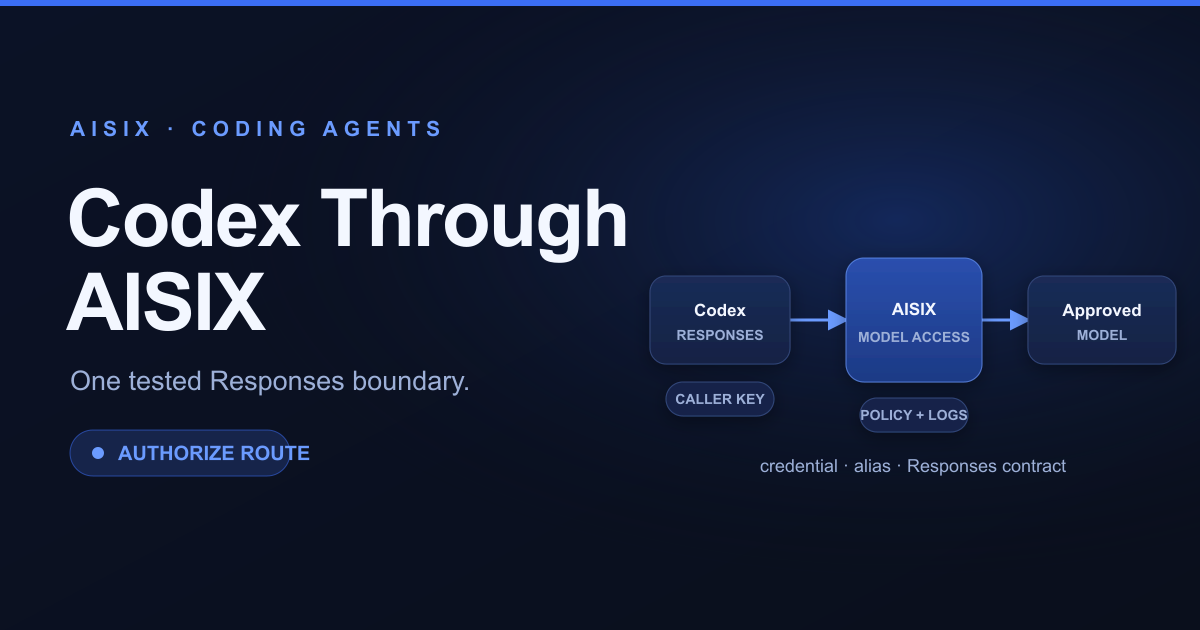
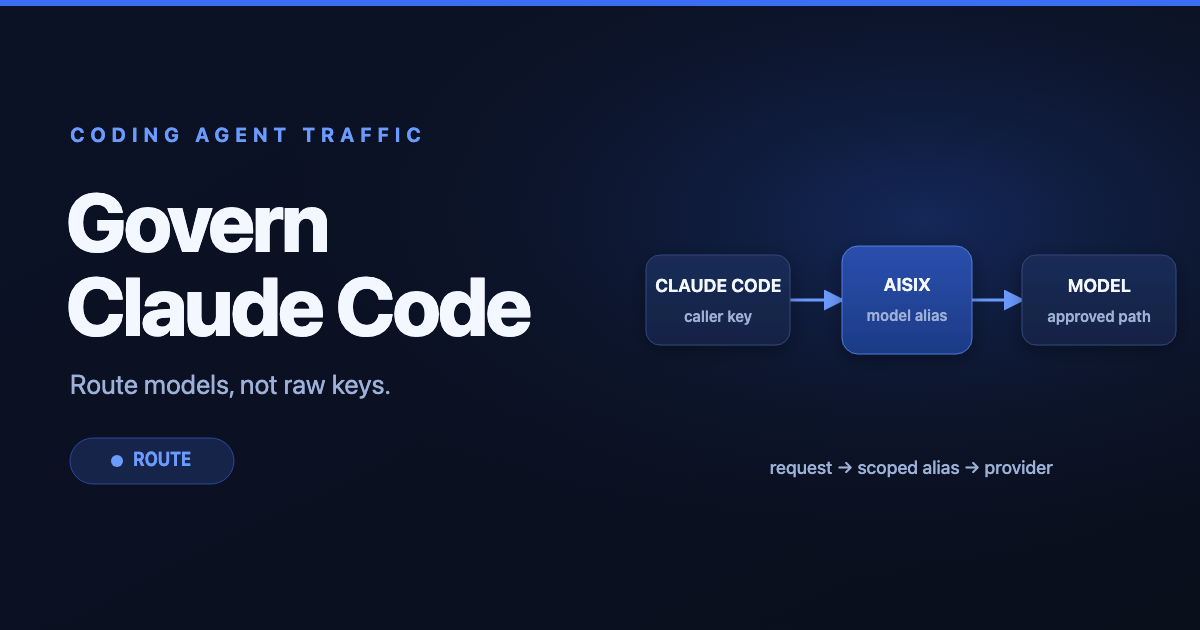
The request formats differ, but identity can remain consistent. The application presents a caller key to the gateway and addresses a stable model alias. The gateway checks whether that caller may use the alias, selects the configured provider path, and adds the upstream credential.
Provider credentials stay out of clients, a platform team can rotate a key or move an alias without changing every application, and logs identify the caller instead of only a shared provider account.
Stable aliases do not erase provider differences. A chat-compatible provider may reject image editing or realtime events. Check the AISIX provider compatibility matrix per endpoint before migration.
This is the key principle: unify the control contract, not unsupported provider semantics.
Apply Policy Without Pretending Every Payload Is Text
Multimodal policy needs to specify what it inspects and what it does not.
Inspect Prompts and Metadata at the Right Hook
Text prompts, caller access, model grants, request size, content types, and rate limits can be checked before dispatch. A prompt guardrail does not prove the resulting media is safe; images, speech, and video may need specialized classifiers or review. AI Gateway guardrails explains why hooks must remain explicit.
Treat Binary Outputs and Signed URLs as Separate Data Paths
A signed provider URL may send the media download around the gateway. If the gateway streams bytes, it becomes part of the bandwidth, timeout, and failure path. Document allowed domains, URL expiry, download authorization, logs, and whether large media affects memory or only egress.
Set Size, Duration, Concurrency, and Egress Controls
Request-per-minute quotas alone are insufficient. Useful controls include:
- upload size, media type, and duration;
- concurrent realtime sessions and media jobs;
- submission limits separate from poll limits;
- timeouts for streams and egress monitoring for downloads.
The existing AI Gateway rate limiting principles still apply, but the dimensions must match each workload.
Observe Cost and Reliability by Modality
Token-based cost is incomplete for multimodal workloads. Images may use count, resolution, and quality; audio may use duration or model-specific units; video adds duration, storage, and egress; realtime sessions combine media and connection usage.
Do not replace missing cost data with zero. Record provider data, mark estimates, and keep non-token dimensions. When budgets cannot price a workload, apply conservative request or concurrency limits and reconcile billing later.
Reliability metrics also need lifecycle awareness:
| Operation | Useful signals |
|---|---|
| Media upload | bytes, duration, validation failure, upload latency |
| Generation submit | model alias, provider, accepted/rejected, queue status |
| Realtime session | connect success, concurrent sessions, disconnect reason, duration |
| Task poll | task state, poll frequency, provider error |
| Media download | redirect vs stream, bytes, transfer duration, short read |
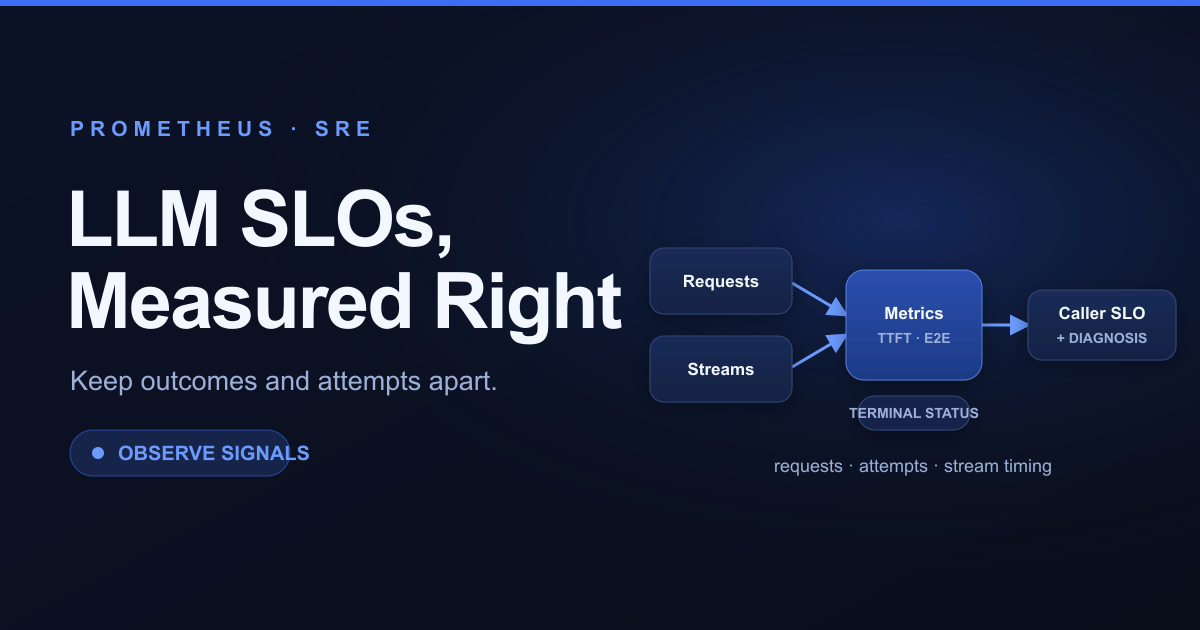
An AI Gateway observability layer should preserve these distinctions while giving the platform team one place to correlate caller, model alias, provider, and request ID.
Route Multimodal APIs Through AISIX
The AISIX supported endpoints page lists image generation and editing, video, speech and audio, and realtime surfaces alongside text and other APIs.
A practical rollout sequence is:
- Inventory each endpoint, transport, provider, and model.
- Separate aliases when compatibility or policy differs.
- Issue caller keys per workload or team.
- Validate fields, streams, task IDs, and downloads against the provider matrix.
- Apply only supported guardrails and limits.
- Export metadata without storing sensitive media by default.
- Test provider errors, interrupted streams, expired IDs, and failed downloads.
sequenceDiagram
    participant App as Application
    participant GW as AISIX AI Gateway
    participant Provider as Media provider
    App->>GW: Caller key + model alias + media request
    GW->>GW: Authorize, validate, apply input policy
    GW->>Provider: Provider credential + upstream model
    Provider-->>GW: JSON, stream, task ID, or media
    GW-->>App: Endpoint-native response
    GW->>GW: Record lifecycle-aware telemetry
Multimodal AI Gateway Checklist
Before moving a media workload behind an AI gateway, verify:
- Does the gateway support the exact endpoint and provider combination?
- Is the request JSON, multipart, binary, SSE, WebSocket, or asynchronous?
- Can the caller use a stable alias without receiving the provider credential?
- Which prompt, metadata, upload, and output fields can policy inspect?
- Are generated media bytes outside the current output-guardrail path?
- Which unit drives rate limits and cost: requests, tokens, bytes, seconds, images, or concurrent sessions?
- Do task status and download requests remain bound to the original caller and model grant?
- Does the final media pass through the gateway or a provider-signed URL?
- Are raw images and audio excluded from logs unless retention is explicitly approved?
- Can operators correlate submission, streaming, polling, and download failures?
Conclusion
A multimodal AI gateway is valuable because it gives diverse media workloads consistent identity, credential isolation, routing, policy, and telemetry. It is trustworthy only when it keeps transport, provider, safety, and billing differences visible.
Do not evaluate multimodal coverage by counting model names. Map the application lifecycle—upload, submit, stream, poll, and download—then confirm each path. Start with the AISIX AI Gateway endpoint inventory and provider compatibility documentation to see which image, audio, video, and realtime workloads can move behind the gateway today.