LiteLLM vs AISIX: Choosing an AI Gateway for Production

Yilia Lin
November 5, 2026
Imagine maintaining an AI customer-support assistant. At first, it calls one model provider with an API key. Later, you add a second model to improve answers and a backup deployment to handle rate limits. As an internal knowledge base, operations tools, and other teams join, the call path takes on more responsibilities.
Who holds the provider credentials? Which requests can switch targets when the primary model fails? How do you separate team spending? Can sensitive output be handled before a user sees it?
At this stage, an AI gateway affects application reliability and the amount of operational work your team handles each day.
LiteLLM and AISIX can both take on that responsibility. They share capabilities across model access, routing, rate limits, caching, and guardrails, but differ in how you use them, what their open-source editions include, and how they operate. Those differences help determine which fits your application.
How much must change in an existing application?
One clear LiteLLM strength is flexibility at the point of integration. Python applications can use its SDK directly, or teams can deploy a separate Gateway that serves applications written in different languages. Its documented API surface is broad, spanning chat, Responses, embeddings, multimodal endpoints, OCR, and search. See the LiteLLM introduction and supported endpoints.
Applications already using the SDK can retain that calling pattern while adopting routing and governance. Teams that rely on many provider interfaces may also benefit from its range of adapters.
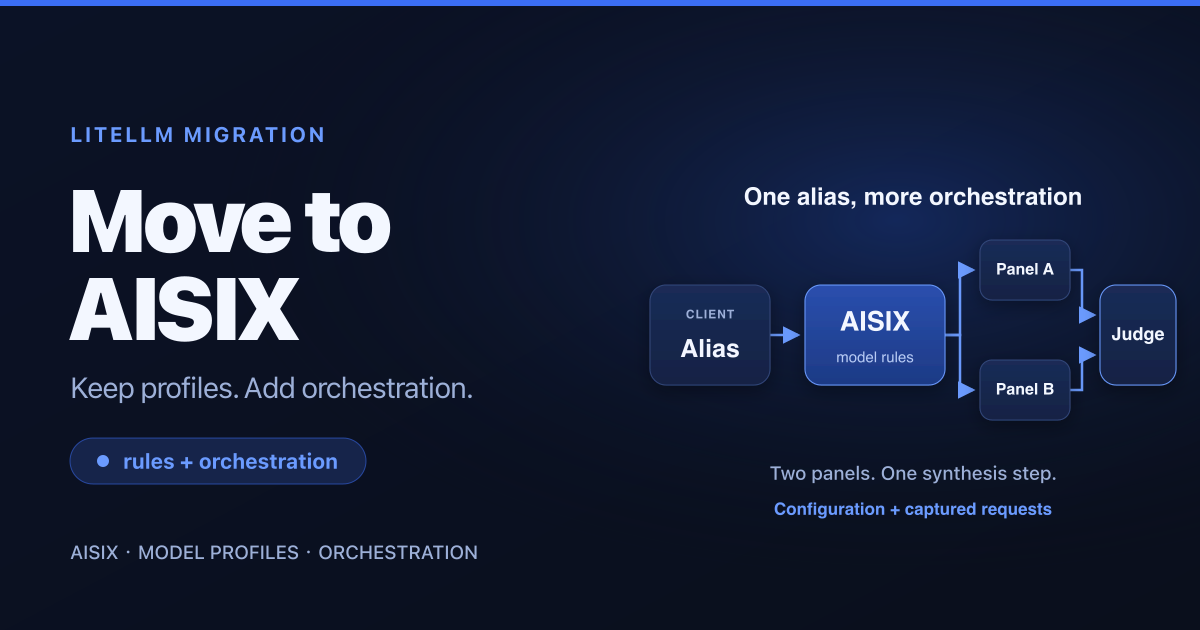
AISIX centers on a separate gateway. Provider credentials, model aliases, caller keys, and runtime policies are gateway resources. In OSS mode, operators can declare those resources in a configuration file. Applications request model aliases while the platform team manages the providers and access rules behind them. See the AISIX resources-file reference.
This approach becomes particularly useful when several applications share models. The support assistant, knowledge base, and operations tool can each have a caller identity, while the platform team maintains provider credentials, model configuration, and policies centrally. Provider changes have a common place to be managed.
A common endpoint still needs validation with real requests. AISIX exposes Chat Completions, Anthropic Messages, and Responses, with provider and model-type constraints on individual routes. For example, embeddings use the OpenAI adapter family, and some stateful APIs require a direct model. See the AISIX Proxy API reference.
Start migration testing with a typical application conversation, then add streaming, tool calls, and multimodal requests. Check that the existing SDK can complete the workflow. Tool arguments, terminal events, and error formats can all affect application behavior.
What will users experience when the primary model fails?
Return to the support assistant. It normally uses a primary model and tries a backup during an upstream failure. As traffic grows, you may also want to distribute requests across deployments or prefer a less expensive target.
LiteLLM supports load balancing across deployments, including selection based on active work, latency, and cost, along with retries and fallback configuration. See LiteLLM routing and load balancing.
AISIX organizes this through a multi-target model. The application requests a business-facing alias, and the gateway selects a direct model according to policy. Target weights and priorities organize active and backup pools; consistent hashing can establish target affinity using a configured request key. See AISIX multi-target routing and failover.
For a platform team, model changes become centrally managed traffic changes. The support application keeps its business alias while operators adjust targets, traffic distribution, and backup relationships in the gateway. That reduces the provider-switching logic individual applications must maintain.
The configuration has boundaries. AISIX fails over on eligible failures. Upstream 429 responses need the relevant retry configuration, and an unreadable response with a successful status is not treated as a retryable upstream failure. Target affinity also does not replace application session-state management.
User-visible reliability depends on the time the application can wait and the stage at which a failure occurs. Switching before a normal response returns differs from recovering after a stream has delivered partial output. Tool execution adds the risk of repeated calls.
Give both gateways the same failure scenarios: a primary returning 503, rate limiting, timeouts, and a connection dropping after streaming starts. Observe the client result and correlate it with upstream records to establish which attempts occurred. That is how to determine whether recovery meets the application's needs.
Can you control spending across multiple teams?
Once support, engineering, and operations share models, a single total bill cannot answer every management question. Teams need to attribute spending and set limits for different uses.
LiteLLM's open-source Gateway includes basic budgets, spend tracking, and an Admin UI. Keys can carry monetary limits and budget periods, making it an attractive starting point for teams seeking basic spending controls in open source. See LiteLLM budgets and rate limits and its edition overview.
AISIX's centralized budgets belong to Enterprise and Cloud. They cover scopes such as organizations, environments, caller keys, provider keys, teams, members, and cost attribution tags. Their value is clearest when multiple people and teams share a service: spending responsibility can follow the organization's management structure, and the gateway enforces the resulting budget state. See AISIX budgets.
Budgets and rate limits work together. A monetary budget constrains spending over a period; request, Token, and concurrency limits protect shared capacity from a busy workload. AISIX supports limits on keys, models, and separate policies, with multiple matching limits applying to a request. See AISIX rate limits.
Keep settlement timing in mind. Full cost is often known after a request completes. Under AISIX's documented budget mechanism, the control plane counts spending and propagates exhausted state; the gateway checks before subsequent upstream calls. In-flight requests and propagation time can therefore cause overspend. Design budgets alongside alerts and capacity limits.
Calculate cache value from your traffic
Caching offers another way to reduce spending, but coverage differs.
LiteLLM's response cache covers several call types, including embeddings, Responses, and Messages. AISIX's current response-cache path is limited to non-streaming Chat Completions, with memory and Redis backends. Its semantic cache also has an OSS configuration path. See LiteLLM caching, AISIX response caching, and AISIX semantic caching.
If repeated embedding calls dominate your workload, LiteLLM's broader cache coverage deserves attention. If repetitive chat requests are your main workload, evaluate AISIX's cache policies and sharing scope against those requests.
The support scenario also illustrates a constraint: similar questions do not necessarily have shareable answers. Order status, account details, and current prices depend on context. Decide which responses may be reused before enabling caching.
When do access and content policies take effect?
Sharing one provider key across applications makes permissions, attribution, and revocation harder to manage. Give applications or agents distinct identities, then grant access to the models and resources they need.
LiteLLM provides virtual keys for model access and spend tracking. Its documented key-management setup uses PostgreSQL, with objects managed through the API or UI. See LiteLLM Virtual Keys.
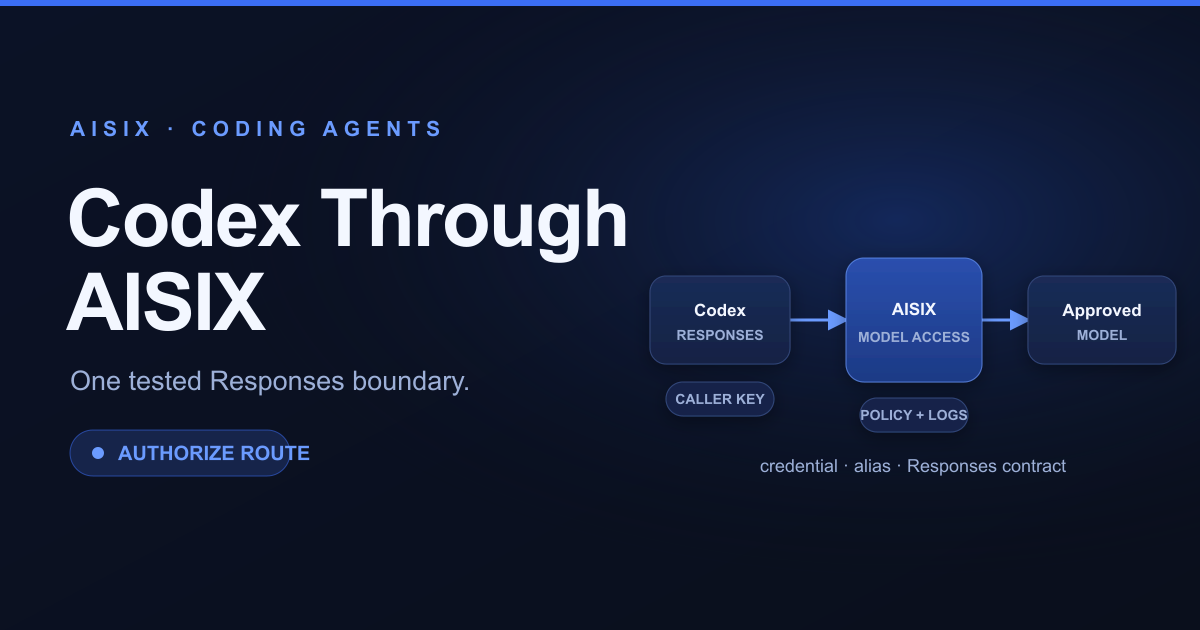
An AISIX capability worth examining is JWT authentication in the OSS gateway. An agent presents a short-lived Token; the gateway verifies its signature and configured claim requirements, then maps the external identity to a caller key. The request inherits that key's model permissions, rate limits, and usage attribution. The agent does not need the caller key's plaintext value. See AISIX JWT authentication.
For teams already using identity systems such as Keycloak or Entra ID, this offers a path to reuse their existing identity infrastructure. They can build model-access policy around existing identities and reduce the need to distribute long-lived credentials to agents. Trust configuration and identity mapping are still required; administrator SSO is configured separately.
The timing of content checks
Identity determines who can call. Guardrails address risks in request and response content.
LiteLLM provides input, output, and other execution modes, including checks during background logging. Whether a check can block or mask content depends on the integration and mode. See LiteLLM guardrails.
AISIX's treatment of streamed output is worth examining. Enforcing output guardrails hold content while checking a full response or buffered windows, depending on the guardrail and endpoint. Monitor mode observes and records matches. See AISIX guardrail behavior.
For the support assistant, this addresses a direct need: deciding what to do with sensitive output before the relevant content reaches a user. Buffering and inspection behavior matter particularly when sensitive text spans stream chunks.
The trade-off should be explicit. Buffering can delay the first content delivered to the client. Guardrails also have endpoint coverage, recognized-content, buffer-size, and failure-policy constraints; buffering alone does not prove that every forwarded byte was inspected. Deployment requires deciding what must be blocked and how much waiting the application can accept.
What must you maintain and troubleshoot in production?
For teams operating AI access as shared infrastructure, another AISIX attraction is the ability to start with a declaratively configured standalone gateway and choose a control plane as management needs grow.
The OSS resources file can fit an existing version-control and change-management process. Operators still own validation and deployment. A successful load replaces the active resource snapshot, so updates must retain the complete configuration. See the AISIX resources-file documentation.
For centralized management, teams can host the Enterprise control plane or use the API7-hosted Cloud control plane. In both cases, the gateway continues to run in the customer's infrastructure and sends live model requests to providers. The control plane handles management and receives relevant health and usage information; telemetry scope still needs separate configuration and review. See AISIX deployment options.
This separates decisions about gateway placement from responsibility for operating the control plane. A team seeking less management-service maintenance while running its own gateway can evaluate Cloud. Changing management modes still requires resource recreation or migration planning; a shared proxy API does not imply automatic configuration migration.
LiteLLM also supports component separation. Its production guide offers monolithic deployment or separate Gateway, Backend, and UI services that scale independently, using PostgreSQL and Redis for the relevant management and shared-state needs. See LiteLLM production deployment.
Compare deployment complexity at equivalent scope. A basic proxy and a deployment with budgets, UI, multi-instance rate limits, and centralized governance naturally require different maintenance work.
AISIX control-plane recovery also has conditions. A running gateway can keep its accepted configuration during disconnection, while new configuration waits for reconnection. Recovery across process restarts requires explicitly enabling the disk snapshot cache. Features that depend on control-plane state, such as budgets, need their own outage-policy assessment. See AISIX offline resilience and budget outage behavior.
See the failures behind a successful response
A successful final response does not mean the call path is healthy.
Suppose the primary returns 502 and a backup completes the answer. The business team sees a successful interaction, but the platform team still needs to know the primary is failing. Otherwise, backup capacity may keep hiding the problem.
LiteLLM provides OpenTelemetry and integrations with observability tools to bring request information into an existing tracing system. See LiteLLM OpenTelemetry.
AISIX documentation distinguishes client requests, upstream attempts, and usage events. Attempts can be correlated by request identifier and sequence. Streamed requests also need a distinction between the initial HTTP status and the terminal outcome. See AISIX metrics and usage events.
This distinction has a practical operational benefit. Business success rates describe user experience; upstream attempt records help locate provider and routing problems. Teams can see how many requests failover rescued and investigate the extra waiting and calls behind those successes.
Use a real request to evaluate troubleshooting: can you find the actual target, retry order, stage timings, and consumption records? Walking through that question often reveals more than browsing a monitoring feature list.
Evaluate performance under equivalent conditions
AISIX implements its gateway in Rust, but performance still needs measurement. LiteLLM also documents a Rust Gateway Beta, whose coverage and release status require separate verification. Without equivalent hardware, enabled features, and request workloads, this article does not rank latency or throughput. See LiteLLM Rust Gateway Beta.
Open-source and commercial feature boundaries
Before adopting an open-source gateway, define the functionality you need.
LiteLLM's open-source Gateway includes basic budgets, spend tracking, and an Admin UI, lowering the barrier to basic management. SSO, SCIM, audit, and advanced organizational governance have Enterprise licensing boundaries, with free allowances or conditions for some features. See the LiteLLM edition overview.
AISIX OSS provides gateway capabilities such as model proxying, routing, rate limits, caching, guardrails, and JWT. A centralized dashboard, organizational governance, and budgets belong to the Enterprise or Cloud control plane. See the AISIX control-plane overview.
Free basic budgets and a management UI are a clear LiteLLM advantage. AISIX OSS is a fit to evaluate for teams operating a separate gateway through declarative resources and existing identity systems. Once centralized governance is needed, compare commercial plans, licensing scope, and maintenance responsibilities.
Start by validating one application
Make the choice with an application whose scope you can define clearly.
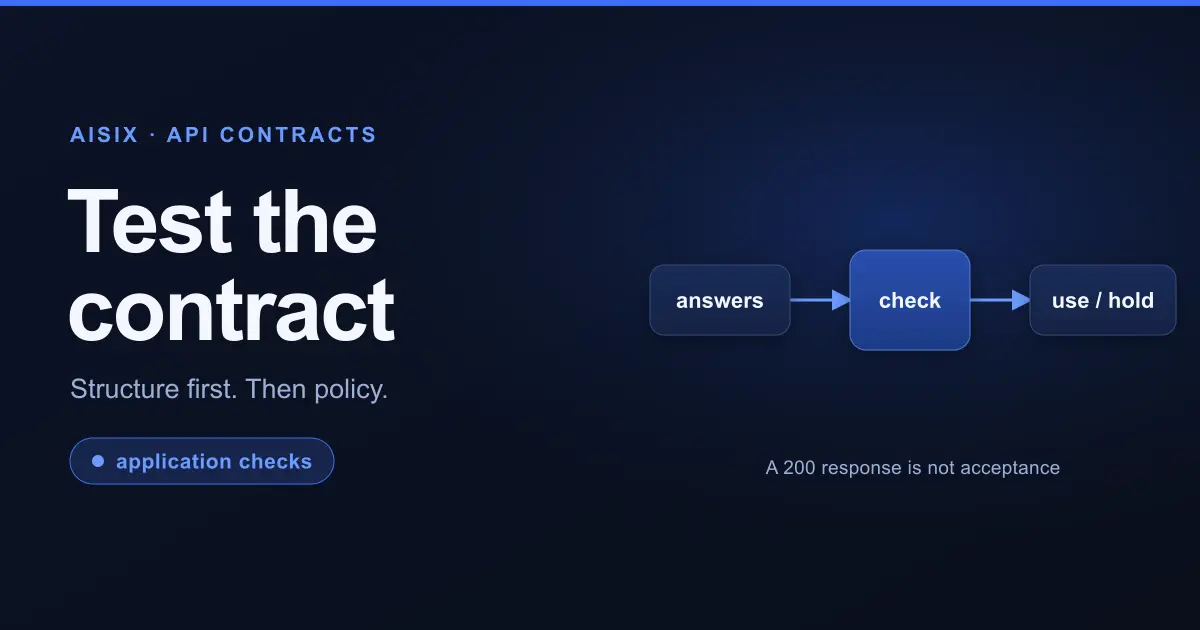
First, run normal conversations, streaming, and tool calls through each candidate. Then deliberately introduce a primary failure: return 503, trigger a timeout, or interrupt a stream. Check whether the backup takes over as configured, whether the client receives a result it can handle, and whether logs reconstruct the sequence. This is a proposed validation method; this article has not run a comparative fault test.
Once normal and failure paths meet expectations, add cost, identity, and content policies incrementally. Retain the original endpoint and a rollback path during cutover, and observe success rates, latency, and spending under a small traffic share first.
LiteLLM is a natural starting point if your team already relies heavily on its SDK, needs a broad API surface, or wants budgets and a management UI in an open-source Gateway.
AISIX deserves focused validation if the team wants to operate model access as independent infrastructure. Declarative resources bring configuration into existing change processes; JWT connects agents to an established identity system; routing and guardrails centralize traffic policy; and the distinction between requests and attempts helps explain production problems. Together with self-hosted or hosted control-plane options, these mechanisms form its practical value for platform teams.
Start with the LiteLLM quickstart or AISIX deployment guide, and validate those trade-offs with your application.
Sources checked on November 5, 2026. This article follows official documentation from both projects. No equivalent-load performance benchmark or comparative fault test was run; availability depends on the deployed version, provider, and configuration.