PII Redaction in an AI Gateway: Protect Sensitive Data Before It Reaches an LLM

September 1, 2026
AI Gateway PII redaction detects sensitive values in AI requests or responses and masks them with safe tokens or blocks traffic. Input redaction can stop personal data and secrets before they reach an external model provider; output redaction can keep detected values from the caller. The design choices are hook point, detector set, action, and retained evidence.
Key Takeaways
- Input redaction protects the provider boundary; output redaction protects the caller but cannot undo data already sent upstream.
- Masking is useful when the AI task can continue without the original value. Blocking is safer when context, regulation, or unsupported content makes substitution unreliable.
- Monitor mode helps measure false positives but does not protect data because matched content continues through the request path.
- Response-side streaming inspection may require buffering, increasing time to first token and memory use.
- AISIX AI Gateway includes gateway-local PII detectors, masking and blocking actions, custom patterns, and scoped attachments in Cloud and open-source deployments.
Why PII Reaches LLMs So Easily
An LLM request contains more than a user’s sentence. Applications assemble instructions, history, retrieved documents, database records, tool results, and metadata into one model call. Any part can contain personal data, credentials, source code, or confidential information.
Sensitive information travels in both directions. A customer may paste a card number into a prompt, retrieval may attach employee details, a tool may return a token, and a model may repeat a secret or disclose data from an overbroad result.
The OWASP LLM02:2025 Sensitive Information Disclosure category covers personal, financial, health, credential, legal, and confidential business data. Redaction is one layer; it does not replace access control, data classification, retrieval authorization, or secure application design.
Putting the detector in an AI Gateway creates one enforcement point across applications and model providers. It also makes policy independent of a specific SDK. The gateway can apply a consistent rule after authenticating the caller but before routing the request, and it can record the detector and action without distributing sensitive-data logic across every service.
Where an AI Gateway Can Redact PII
Start with the hook point.
flowchart LR
    A[Application or agent] --> I[Input PII policy]
    I --> G[AISIX AI Gateway routing]
    G --> P[Model provider]
    P --> O[Output PII policy]
    O --> A
    I --> E[Detector and action metadata]
    O --> E
Input Redaction Protects the Provider Boundary
Input inspection runs before the provider call. If a detector finds alex@example.com, a mask action can replace it with a token such as [EMAIL_REDACTED] before routing continues. The provider sees the token, not the original email address.
Use this hook to keep a value from entering a provider. It works only for content the gateway can parse; opaque bodies, encrypted fields, images, audio, and unsupported binary frames need another control.
Output Redaction Protects the Caller
Output inspection runs after the model provider has produced content but before the gateway returns it. It can mask or block sensitive text that the model generated or repeated.
Output redaction does not protect the upstream boundary. The provider already processed the request. If the risk is unauthorized disclosure to the provider, an output-only policy is too late.
Both-Side Inspection Has a Cost
Using both hooks protects both boundaries but adds work. Enforcing a streamed response policy may require holding content until evaluation, increasing latency and memory use.
The operational rollout in AI Gateway Guardrails applies here: choose a narrow scope, test representative traffic, measure false positives and latency, and define how the caller handles policy errors before enforcement expands.
Mask, Block, or Monitor?
Mask when the task can still succeed without the original value. A support summarizer may not need a customer’s email address. Replacing it with a typed token preserves useful context: the model knows that an email was present but cannot see the value.
Block when substitution could be unsafe or misleading. A payment workflow may need an exact account value and should move to an approved non-LLM path instead of asking a model to act on [BANK_CARD_REDACTED]. Blocking is also appropriate when policy forbids any processing of the detected data, when the detector finds a private key or credential, or when the payload cannot be rewritten safely.
Monitor mode is for measurement. It records what a detector would match while allowing traffic to continue. That helps teams tune patterns, identify unexpected business cases, and estimate policy volume. It is not a privacy control: the original value still reaches the next component. Do not leave a policy in monitor mode and describe the data path as protected.
Set actions by detector and workload. An email address, a Social Security number, and a JWT do not share the same risk or recovery path.
Build a Practical PII Detection Policy
Begin with data classes, not a giant regular expression. Identify which values the workload can receive, which are necessary for the task, and which are prohibited from reaching each provider or caller.
AISIX PII Detection and Redaction documents built-in detectors for email addresses, mainland China mobile numbers and resident ID numbers, bank cards, US Social Security numbers, IP addresses, API keys and tokens, JWTs, and PEM private keys. Some structured number detectors validate checksums, reducing false positives compared with matching any digit sequence.
Use custom patterns for organization-specific identifiers. Each needs an owner and tests for positives, close non-matches, boundaries, Unicode, structured or long inputs, repeated matches, and detector interactions.
A regex finds a shape, not whether a value is real, personal, public, or necessary. False positives remove context; false negatives create false confidence.
Scope policy to the smallest useful boundary. A production support environment may require email and account masking, while a test environment using synthetic data does not. A model hosted inside an approved private boundary may have a different policy from an external provider. Caller API keys, teams, environments, and model aliases provide useful attachment points when they reflect real ownership.
Handle Streaming, Unsupported Content, and Failure Modes
Response-side streaming is not merely a transport detail. If tokens are released immediately, a detector may identify sensitive content only after part of it has reached the caller. An enforcing gateway therefore has to hold enough output to make the policy meaningful.
Measure time to first token, latency, memory, and buffer-overflow behavior. Fail-open may release uninspected data; fail-closed can turn a detector outage or oversized output into an error. Test and document the workload-specific choice.
Local detection avoids another data transfer. Remote DLP may classify more richly but adds a destination and processor. Review region, retention, access, and failure behavior first.
For unsupported audio, images, encrypted fields, passthrough payloads, or binary frames, block or route to specialized inspection rather than claiming coverage for content the gateway never parsed.
PII Redaction with AISIX AI Gateway
AISIX runs its built-in PII detector inside the gateway. A policy can inspect input, output, or both, then mask matches with typed redaction tokens or block the request or response. The documented behavior avoids writing matched values to gateway logs, usage records, or error responses; operational records carry detector names and match counts instead.
An open-source AISIX deployment can add this excerpt to a resources.yaml that already defines its model and caller key:
guardrails:
  - name: pii-redaction-policy
    enabled: true
    hook_point: input
    kind: pii
    default_action: mask
    detectors:
      - type: email
      - type: api_key
guardrail_attachments:
  - guardrail_id: pii-redaction-policy
    scope_type: env
    priority: 100
This environment-scoped attachment applies the guardrail to every request; without an attachment, the guardrail loads but inspects no traffic. Validate the complete file with aisix validate --resources resources.yaml, reload the gateway, and confirm the configuration is active. Use a documented narrower scope and scope_id when environment-wide masking is too broad.
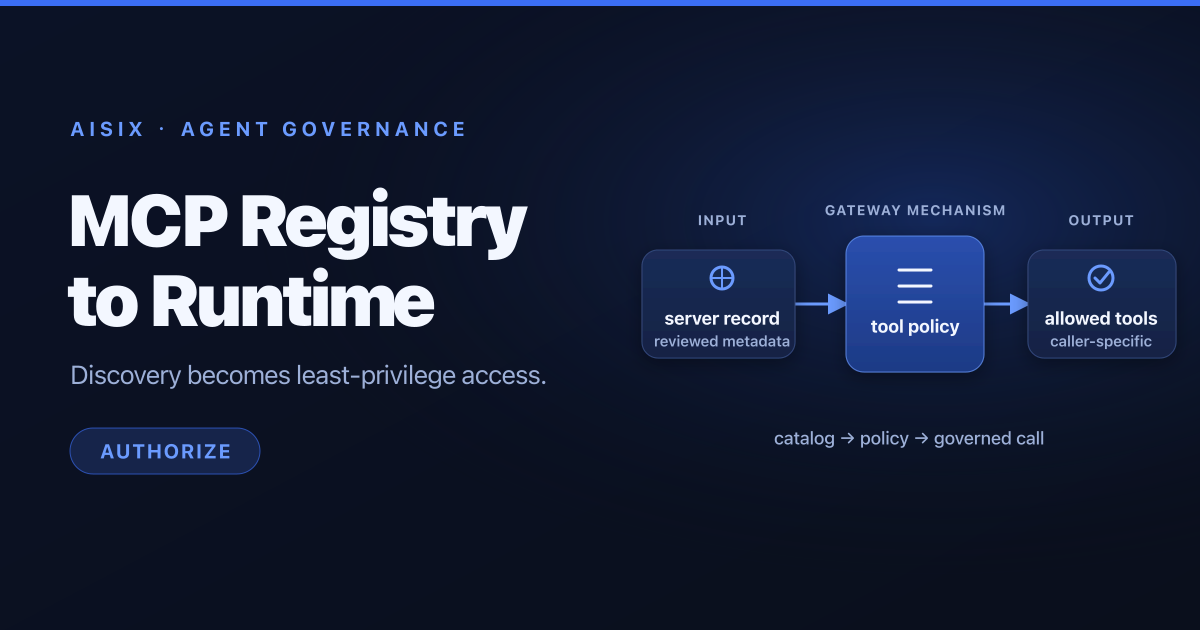
AISIX Cloud manages guardrail resources and attachments through its control plane. Policies can be attached at documented scopes such as an environment or narrower model, caller key, or team boundary. Open-source AISIX manages the same scope model declaratively at the gateway, although its configuration workflow differs from Cloud.
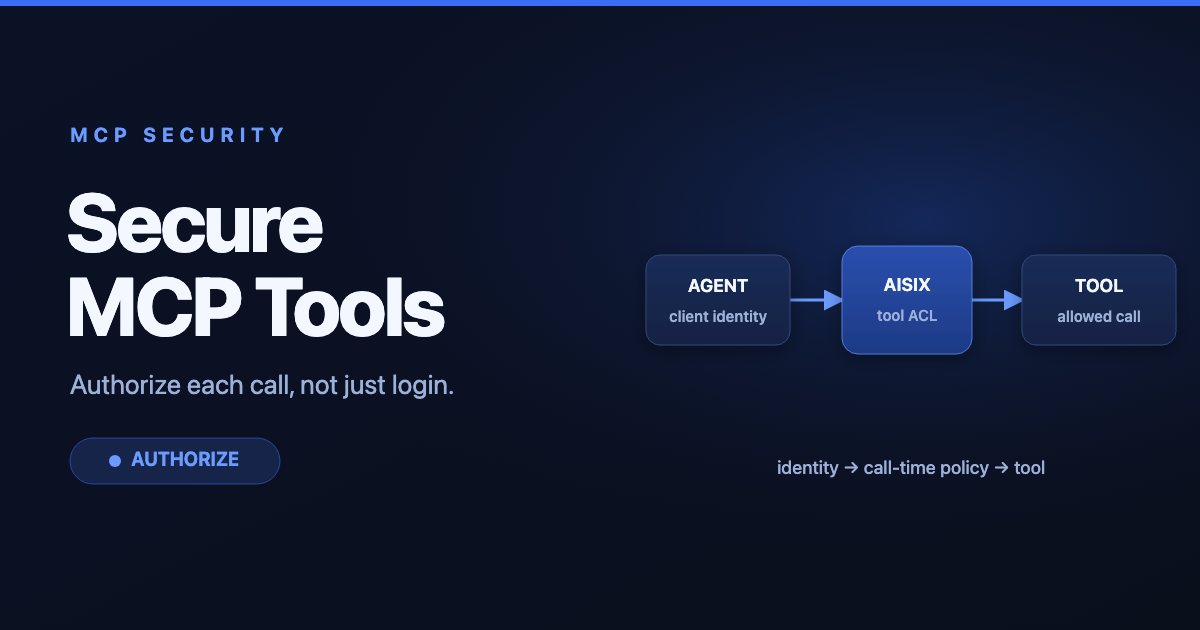
PII redaction connects to AI Gateway Security: caller identity says who sent data, routing says where it would go, and the guardrail decides whether it can cross the boundary. Metrics and logs record the policy outcome without raw matched values.
Test Before Enforcing PII Redaction
Build a synthetic test set. Never use real customer records or live secrets to prove the detector works.
Include positive cases and close non-matches. Test multilingual text, JSON, tool arguments, retrieval snippets, multiple matches, streaming, and maximum payloads. Confirm documented errors for blocking and typed tokens for masking.
Then test the negative space:
- Does a harmless order number trigger a bank-card detector?
- Does masking remove context the model needs to complete the task?
- Can spacing or Unicode variants bypass a custom pattern?
- Are matched values absent from gateway logs, application errors, traces, and support tooling?
- What happens when output exceeds the streaming inspection buffer?
- Does retry or fallback send the original or already-masked request?
Measure detector latency and false-positive rates by workload. Review the policy when the application changes its prompt assembly, retrieval source, provider, model, endpoint, or streaming mode. Detection quality is an operating responsibility, not a one-time configuration step.
Privacy teams must decide whether masking is sufficient because surrounding context may still identify a person. The ICO data minimisation guidance recommends limiting processed data, reviewing retention, and considering masking or anonymization. Legal anonymity requires more than a pattern match.
PII Redaction Checklist for Production AI
- Map sensitive data sources in prompts, retrieval, tools, and responses.
- Define which values are prohibited at the provider and caller boundaries.
- Choose input, output, or both hooks based on that boundary.
- Assign mask or block actions by detector and workload.
- Treat monitor mode as measurement, not protection.
- Start with built-in detectors; add owned and tested custom patterns only where needed.
- Scope policies by environment, model, caller, or team.
- Test streaming latency, buffer limits, and fail-open/fail-closed behavior.
- Confirm matched values do not appear in logs, errors, traces, or support systems.
- Re-test when routes, models, providers, payloads, or policies change.
Conclusion
PII redaction at the AI Gateway gives platform teams a shared control before sensitive text crosses a provider or caller boundary. Input masking can keep original values away from an upstream model. Output masking can protect the caller. Blocking provides a safer path when substitution or unsupported content makes redaction unreliable.
The control is effective when its scope and limits are explicit. Use synthetic tests, measure false positives and streaming cost, minimize evidence fields, and keep access control and data governance around the detector. AISIX AI Gateway provides gateway-local PII detection, masking, blocking, custom patterns, and operational policy context for production AI traffic.