Open Source AI Gateway: Envoy, AISIX, Kong, and Cloudflare Compared

July 1, 2026
Key Takeaways
- An open source AI Gateway should be evaluated as production infrastructure, not only as a GitHub repository or an LLM proxy.
- Enterprise teams need controls for model routing, authentication, rate limiting, token usage, agent tool calls, observability, and audit.
- Envoy AI Gateway, AISIX, Kong, and Cloudflare approach the AI Gateway problem from different infrastructure starting points.
- AISIX is an AI-native open source gateway designed for LLM traffic, provider routing, token controls, observability, and future agent/MCP workloads.
- The best choice depends on your existing platform stack, deployment model, governance requirements, and support expectations.
Why Open Source AI Gateways Matter
AI applications are moving from prototypes into production systems. A single application may call OpenAI, Anthropic, Azure OpenAI, Gemini, a private model, a vector database, internal APIs, and MCP servers. A single user request may trigger multiple model calls and tool calls. That creates new runtime problems: provider credentials must be protected, traffic must be routed, usage must be monitored, cost must be controlled, and security teams need auditability.
Many teams start by searching for an open source AI Gateway because they want transparency and control. They want to inspect how traffic is handled, customize policies, deploy close to their applications, and avoid locking every AI workload into a single vendor service. Those are valid reasons, especially for platform teams that already operate Kubernetes, service mesh, API gateways, or internal developer platforms.
But "open source AI Gateway" can mean different things. Some projects are LLM proxies. Some are extensions to existing API gateways. Some are cloud services with gateway features. Some are open source data planes paired with commercial control planes. The right evaluation question is not only "Is there a GitHub repository?" It is "Can this gateway safely operate production AI traffic for multiple teams?"
For enterprise teams, AI Gateway decisions should connect developer velocity with governance. Developers need a simple way to call models and tools. Platform teams need consistent policies. Security teams need access control and audit logs. Finance teams need usage attribution. Operations teams need metrics and failure handling.
The AI Gateway Guide explains those shared architecture and operating requirements. This comparison applies them to open-source project selection.
What Is an Open Source AI Gateway?
An AI Gateway is a runtime control layer between AI applications and the models, tools, APIs, and services they call. It can route requests, enforce policies, protect credentials, observe usage, and apply cost controls.
An open source AI Gateway usually falls into one of three categories:
- A standalone LLM proxy that normalizes model provider APIs.
- An AI extension to an existing API gateway or proxy.
- A broader enterprise traffic control layer that governs APIs, LLM calls, agent workflows, and tool access.
The distinction matters. A model proxy may be enough for a small team that only needs one endpoint for several providers. It is less likely to be enough for a regulated enterprise that needs tenant-level quotas, RBAC, audit trails, internal API protection, and hybrid deployment. A gateway extension may be a better fit if the organization already manages API traffic through a mature gateway. A commercial platform may be appropriate when the team needs a supported control plane, collaboration workflows, and enterprise security features.
The open source foundation is still important. It gives teams extensibility, local deployment options, and a clearer path for integrating custom security, logging, compliance, and routing logic. That is why AISIX, Envoy Gateway, and the Kubernetes Gateway API are often part of the discussion.
How to Evaluate an Open Source AI Gateway
Before comparing projects, define the operational requirements. A production AI Gateway should be assessed across runtime traffic control, policy, cost governance, observability, extensibility, and enterprise readiness.
flowchart LR
    App[AI Applications] --> Gateway[AI Gateway]
    Gateway --> Auth[Auth and Policy]
    Gateway --> Router[Model and Provider Routing]
    Gateway --> Limits[Request and Token Limits]
    Gateway --> Audit[Logs, Metrics, Audit]
    Router --> LLM1[LLM Provider A]
    Router --> LLM2[LLM Provider B]
    Gateway --> Tools[Internal APIs and MCP Tools]
    Audit --> Platform[Platform and FinOps Teams]
Runtime Traffic Control
AI traffic is not just HTTP routing. A gateway may need to route by model, provider, tenant, geography, latency, cost, or compliance boundary. It may need retries and fallback when a provider is unavailable. It may need streaming support and timeout controls. In agentic systems, one user request may fan out into tool calls and internal API calls, so request shaping and failure boundaries become more important.
Traditional gateway capabilities still matter. Routing, load balancing, authentication, and rate limiting are not replaced by AI. They become the baseline for AI workloads.
Policy and Security
The gateway should support the identity and security model of the organization. That often means API keys, JWT, OIDC, mTLS, RBAC, consumer identity, and policy enforcement. For AI workloads, security teams also need to think about prompt data, response logging, sensitive data exposure, tool permissions, and audit trails.
The Model Context Protocol specification makes tool and context access more standardized, but standardization does not remove the need for policy. If an agent can call a payment API, customer data API, or infrastructure tool, the gateway must help enforce which agent, user, tenant, and workflow is allowed to do so.
Cost and Usage Governance
AI cost is tied to model choice, context length, output tokens, retries, tool loops, and provider pricing. A production AI Gateway should help platform teams track usage and enforce limits. Request quotas are useful, but token budgets, provider-level limits, and tenant-level usage attribution are often more important.
This is where an AI Gateway differs from a simple reverse proxy. It needs to understand that two requests can have very different costs even if they hit the same endpoint.
Extensibility and Operations
Open source matters most when teams need to customize behavior. Look for plugin models, configuration APIs, Kubernetes support, observability integrations, and declarative operations. Also check whether the project has a path to enterprise support if the gateway becomes a critical production component.
The operational question is simple: if this gateway sits on the hot path of every AI request, can your team upgrade it, monitor it, configure it, and troubleshoot it under pressure?
Envoy AI Gateway
Envoy AI Gateway is a project in the Envoy ecosystem focused on bringing AI-specific traffic management to Envoy-based infrastructure. It is especially relevant for teams already invested in Envoy, Envoy Gateway, Kubernetes, and Gateway API concepts.
The strength of this approach is ecosystem alignment. Envoy is widely used as a high-performance proxy, and the Gateway API is becoming an important Kubernetes-native API for traffic management. For platform teams that already standardize on Envoy Gateway, Envoy AI Gateway can feel like a natural extension.
The evaluation questions are about maturity and fit. Does it cover the AI providers you need? Does it expose the right policies for your tenancy model? How does it integrate with your existing observability, security, and control plane? Does your team want to operate close to the Kubernetes Gateway API layer, or do you need a more complete enterprise API management experience?
Envoy AI Gateway is a strong candidate for Kubernetes-first teams that want AI traffic control aligned with Envoy. It may be less direct for organizations whose gateway strategy is already built around AISIX, Kong, or a managed API platform.
AISIX
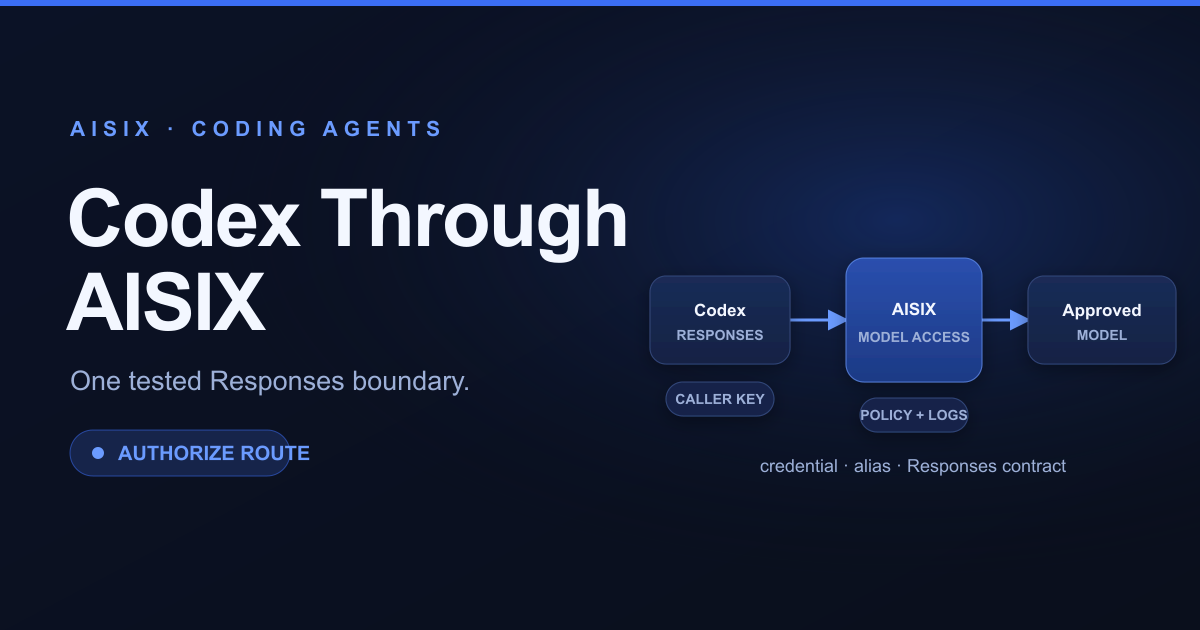
AISIX is an AI-native open source gateway built for production LLM traffic management. Instead of treating AI support as a small plugin on top of a traditional API gateway, AISIX focuses on the AI runtime path: model access, provider routing, token usage, prompt guardrails, observability, and developer workflows.
Its core value is that AI applications can call multiple model providers through a unified OpenAI-compatible interface. Teams can define virtual models, route traffic across providers, apply request-based and token-based rate limits, observe latency and token cost, and use guardrails such as prompt injection detection, PII redaction, and content moderation. Recent AISIX work also includes model ensembles, where several models can answer in parallel and a judge model synthesizes the result.
That makes AISIX a strong option for teams that want the AI gateway itself to understand LLM-specific units such as models, tokens, providers, streaming responses, and usage cost. It is especially relevant when platform teams need AI traffic controls before agent and MCP usage becomes widespread.
The main evaluation question is whether your team wants an AI-native gateway as a dedicated layer for model and agent traffic, or whether you prefer to extend an existing API gateway estate. AISIX fits the first path: start with AI traffic as the primary workload, then govern providers, prompts, tokens, and future tool calls from that layer.
Kong AI Gateway
Kong approaches AI Gateway from its existing API gateway and Konnect platform ecosystem. Its AI-related capabilities are commonly presented through gateway plugins, model routing, prompt handling, and platform governance. For teams already standardized on Kong Gateway or Kong Konnect, this can be a practical path because AI controls can be added to an existing gateway estate.
The tradeoff is similar to any platform decision: if your organization already uses Kong deeply, the operational path may be straightforward. If not, the evaluation should compare the broader platform model, deployment requirements, plugin ecosystem, commercial packaging, and migration effort against alternatives.
When comparing Kong with AISIX, avoid reducing the decision to a feature checklist. The more useful comparison is infrastructure philosophy: do you want AI controls inside an existing API gateway platform, or do you want an AI-native gateway designed specifically around model providers, tokens, guardrails, and agent-era traffic?
Cloudflare AI Gateway
Cloudflare AI Gateway is often attractive for teams that want a fast way to add analytics, caching, logging, and provider management in front of AI calls. It fits well with Cloudflare's edge network and developer experience.
That makes it useful for many applications, especially when the goal is quick visibility into provider traffic or an edge-hosted gateway experience. The enterprise evaluation should also ask where the gateway needs to run, which internal APIs and private services it must protect, and how deeply it needs to integrate with existing API management, Kubernetes, compliance, and hybrid-cloud requirements.
Cloudflare can be a strong option for edge-centric teams. For organizations that need a self-hosted or hybrid AI gateway with model-level control, AISIX or another deployable gateway-centered approach may be a better fit.
Comparison Framework
| Evaluation area | Envoy AI Gateway | AISIX | Kong AI Gateway | Cloudflare AI Gateway |
|---|---|---|---|---|
| Starting point | Envoy and Kubernetes Gateway API | AI-native gateway for LLM traffic | Kong Gateway and Konnect ecosystem | Cloudflare edge and developer platform |
| Best fit | Kubernetes/Envoy-first platform teams | Teams needing model routing, token controls, guardrails, and AI observability | Existing Kong users | Edge-centric AI traffic analytics and controls |
| Open source foundation | Envoy ecosystem | AISIX open source gateway | Kong Gateway ecosystem | Managed Cloudflare service model |
| Enterprise governance | Depends on surrounding platform | Strong fit for AI provider, token, cost, and future agent governance | Strong in Kong platform | Strong for Cloudflare-managed workflows |
| Hybrid/private deployment fit | Strong for Kubernetes environments | Strong when AI traffic needs deployable gateway control | Depends on Kong deployment model | Best aligned with Cloudflare service model |
| Key question | Is your platform already Envoy/Gateway API-first? | Do you need an AI-native gateway for production LLM traffic? | Are you already standardized on Kong? | Is edge-hosted AI traffic control the priority? |
When Should You Choose Each Option?
Choose Envoy AI Gateway when your team is already deep in Envoy Gateway, Kubernetes, and Gateway API. It is a natural direction when the platform team wants AI traffic control to live close to Kubernetes-native infrastructure.
Choose AISIX when your priority is production LLM traffic management: unified provider access, virtual models, model routing, token and request limits, guardrails, usage visibility, and a gateway path toward agent and MCP governance.
Choose Kong AI Gateway when your organization already runs Kong Gateway or Kong Konnect and wants AI controls inside that platform. Existing operational expertise can matter more than theoretical feature differences.
Choose Cloudflare AI Gateway when your priority is fast AI traffic visibility, provider analytics, and edge-integrated controls in the Cloudflare ecosystem.
Where AISIX Fits
AISIX's position is that AI traffic deserves a gateway designed around AI workload primitives, not only HTTP routes. Traditional API gateway controls still matter, but LLM workloads add model choice, provider availability, token budgets, streaming behavior, prompt risk, and future agent tool calls.
That includes:
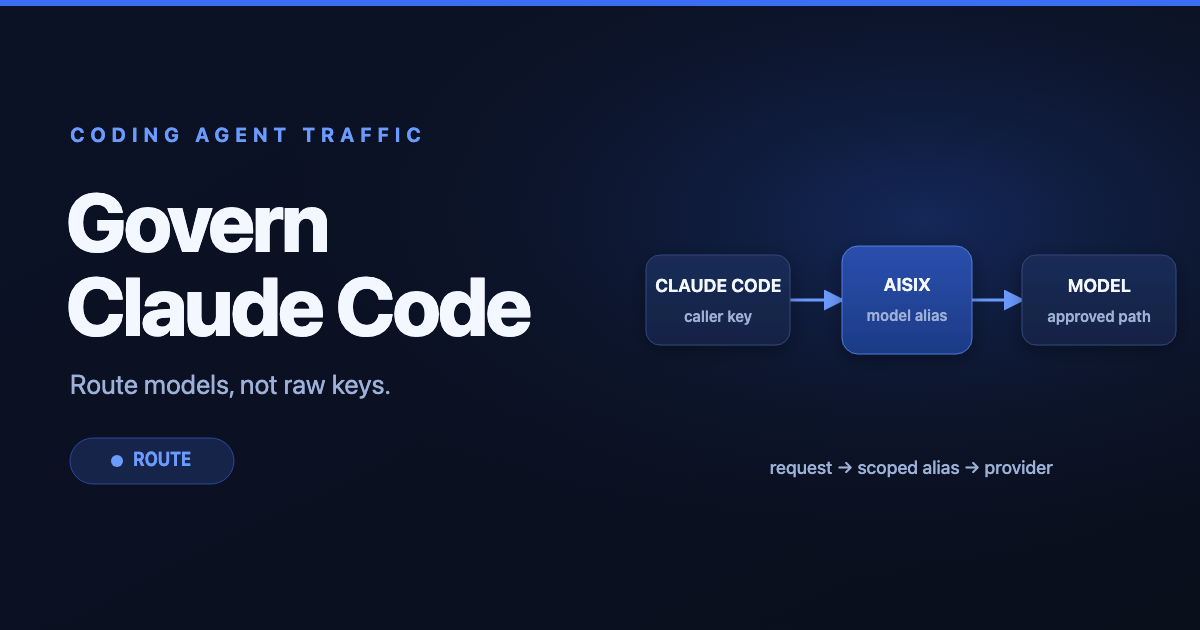
- Unified access to OpenAI, Azure OpenAI, Anthropic, Google Gemini, and other providers through one API shape.
- Virtual models, routing, load balancing, and failover strategies.
- Request-based and token-based rate limits, including model- or consumer-level controls.
- Prompt guardrails such as injection detection, PII redaction, and content moderation.
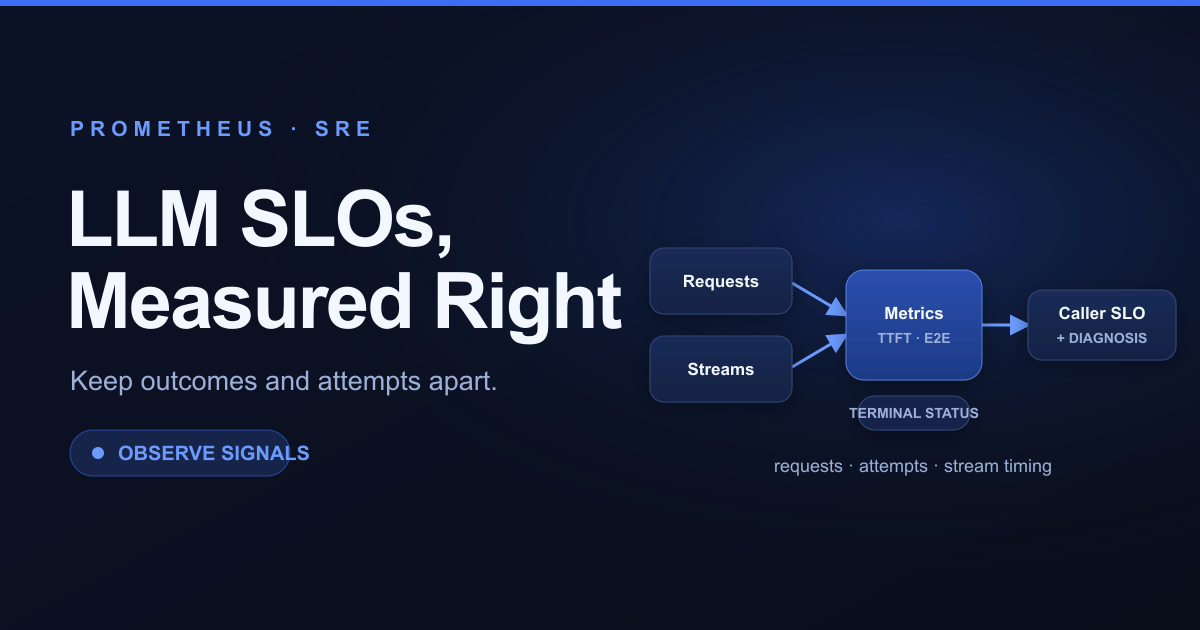
- Observability for latency, logs, token usage, and cost analysis.
- Developer workflows through an Admin UI and interactive Playground.
If your team is already evaluating API gateway platforms, AI Gateway should not be treated as a disconnected experiment. It should be part of the same governance strategy that covers APIs, services, developers, consumers, and runtime policy.
Conclusion
Open source AI Gateway evaluation should go beyond GitHub activity. A project may look promising as a model proxy but still lack the control plane, governance, observability, security, and support model required for enterprise production traffic.
Envoy AI Gateway, AISIX, Kong, and Cloudflare each reflect a different starting point. Envoy starts from Kubernetes-native traffic management. AISIX starts from AI-native LLM traffic management. Kong starts from its gateway platform. Cloudflare starts from edge-delivered AI traffic services.
For platform teams, the best choice is the one that fits the operating model they already trust. If your AI workloads need provider routing, token controls, guardrails, usage visibility, and a path toward agent governance, evaluate AISIX as an AI-native gateway option.