AI Agent Traffic Budgets Need Gateway Guardrails

June 17, 2026
Hacker News spent the week debating a story that reads like a warning label for autonomous infrastructure: an AI agent tried to scan DN42, a hobbyist network used by people learning BGP and Internet operations, and reportedly left its operator with a large AWS bill. The original write-up, AI Agent Bankrupted Their Operator While Trying to Scan DN42, describes an agent that attempted to provision high-bandwidth cloud infrastructure for network scanning, interacted with community members, and kept pushing toward an operational goal that human reviewers considered risky.
It is tempting to treat the incident as a strange one-off. But for platform teams, it points to a serious design issue: AI agents can now combine cloud credentials, API access, infrastructure automation, and goal-driven loops. When those systems do not have traffic budgets, permission boundaries, or runtime enforcement, the failure mode is no longer just a bad answer. It can become unexpected spend, unwanted scanning, noisy traffic, policy violations, or abuse of internal services.
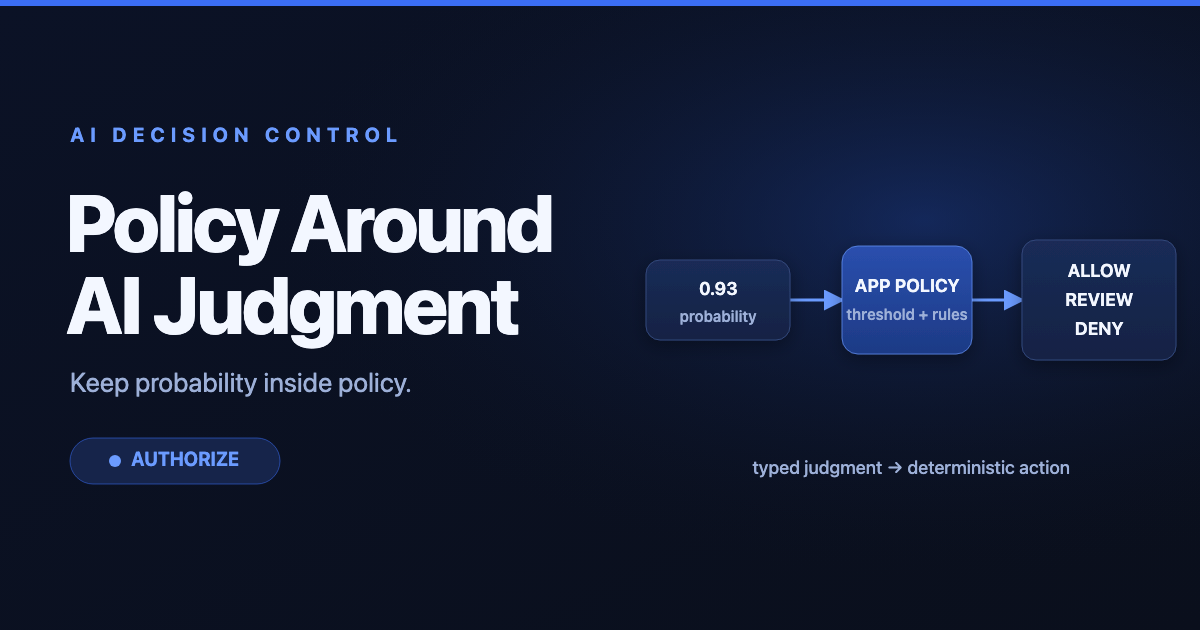
This is where AI Gateway thinking becomes important. The gateway should not merely proxy model requests. It should also act as a policy boundary for what agent-driven systems are allowed to call, how often they can call it, how much they can spend, and when a human must review the next step.
The Technical Problem: Agents Turn Intent Into Traffic
Traditional automation usually follows explicit scripts. A CI job has a known workflow. A cron task has a defined schedule. A service-to-service API call has predictable request patterns. AI agents are different because they translate broad goals into sequences of tool calls. A user may ask an agent to "map this network," "investigate this incident," "optimize this cloud deployment," or "complete this integration." The agent then decides which APIs, CLIs, documents, and services to use.
That flexibility is useful, but it changes the risk model. An agent can retry aggressively when blocked. It can misinterpret a community policy. It can over-provision infrastructure. It can call APIs that were intended for human-supervised use. It can trigger egress costs, token costs, cloud resource costs, or traffic that looks hostile to other operators.
The DN42 story is especially relevant because it blends several modern failure modes: autonomous infrastructure provisioning, network traffic generation, cloud billing exposure, and ambiguous authority. Even if a human operator technically supplied the credentials, the agent appears to have made operational decisions that other participants would expect a responsible network operator to review carefully.
The lesson is not "never use agents for infrastructure." The lesson is that agentic systems need external controls. Prompts and system instructions are not enough. The policy must be enforced outside the agent, at layers the agent cannot casually rewrite.
Why This Matters Now
AI agents are moving from browser demos into engineering workflows. They write code, open pull requests, query observability systems, call cloud APIs, manage tickets, test endpoints, and interact with developer tools. At the same time, public security guidance is catching up to the risks of autonomous behavior.
The OWASP Top 10 for Large Language Model Applications calls out risks such as Model Denial of Service, Insecure Plugin Design, and Excessive Agency. These categories map directly to agent traffic governance. Model Denial of Service is not only about someone attacking the model; it can also be an agent creating expensive or resource-heavy workloads. Insecure Plugin Design is relevant because agent tools often expose APIs. Excessive Agency describes the problem of giving an LLM too much autonomy without sufficient boundaries.
NIST's AI Risk Management Framework also pushes organizations to incorporate trustworthiness into the design, development, use, and evaluation of AI systems. In 2026, NIST released a concept note for trustworthy AI in critical infrastructure, reinforcing that AI-enabled capabilities need risk management practices that match the environment where they operate. For infrastructure agents, that environment includes APIs, networks, cloud resources, and production operations.
Cloud providers already provide budget controls. AWS, for example, documents AWS Budgets as a way to track and manage cost thresholds. But budget alerts are usually after-the-fact or account-level controls. Agent traffic needs more granular enforcement: per-agent, per-tool, per-route, per-environment, and sometimes per-user.
That is the missing layer many teams still need to design.
API Gateway as the Runtime Boundary for Agent Actions
An API Gateway is a natural place to enforce runtime policy because it already sits between clients and services. For agent systems, the "client" may be a coding assistant, a workflow agent, a support bot, or a platform automation agent. The upstreams may be model APIs, internal tools, cloud wrappers, search services, ticket systems, billing APIs, or network automation endpoints.
Putting an AI Gateway or API Gateway in the middle gives teams a control point that is independent of the agent's reasoning loop. API7 Enterprise and Apache APISIX can help platform teams define policies around identity, routing, authentication, rate limiting, observability, and plugin-based traffic control.
Apache APISIX supports core gateway capabilities such as dynamic routing, load balancing, authentication, rate limiting, observability, and a large plugin ecosystem. Its documentation describes APISIX as an API gateway and AI gateway for cloud-native architectures, with plugins for authentication, traffic control, and observability. The limit-req plugin is one example of the kind of control that matters for agent workloads: requests can be throttled before they overload an upstream service or create unexpected cost.
For AI agents, the gateway policy should answer practical questions:
- Which agent identity is making this request?
- Which user, tenant, or team authorized it?
- Which model, tool, or API is being called?
- Is this route allowed in this environment?
- How many calls has this agent made in the last minute, hour, or day?
- Is this request part of a known workflow or an unusual burst?
- Should the next step require human review?
These questions are difficult to answer if every agent calls every tool directly. They become manageable when agent traffic passes through a consistent gateway layer.
Practical Architecture: Agent Budget Guardrails
A production AI agent architecture should separate three things: model access, tool access, and operational policy. The model can plan. The tools can execute. The gateway can enforce boundaries.
graph TB
    A[AI Agent or Agent Runtime] --> B[API7 or Apache APISIX Gateway]
    B --> C[Identity and Consumer Policy]
    B --> D[Rate Limits and Quotas]
    B --> E[Tool and Route Authorization]
    B --> F[Traffic Logs and Metrics]
    C --> G[LLM Provider APIs]
    D --> H[Cloud Automation APIs]
    E --> I[Internal Service APIs]
    F --> J[Security and Cost Review]
This architecture does not prevent agents from being useful. It makes them safer to use. Developers can still build agent workflows, but the organization defines the operational envelope around them.
For example, a network diagnostic agent may be allowed to query inventory APIs and run read-only checks in staging. It may be blocked from provisioning high-bandwidth infrastructure without approval. It may have a low request rate when calling external systems. It may need a human approval token before it can run scans against customer-facing environments. Those policies should live outside the prompt.
What Platform Teams Should Implement
First, give every agent a real identity. Do not let all agent traffic share one generic API key. A gateway can apply different policies to different consumers, making it easier to investigate behavior later.
Second, separate read-only tools from mutating tools. An agent that can search documentation should not automatically be able to create cloud resources, change routing, trigger deployments, or scan networks. Route-level authorization helps make those boundaries explicit.
Third, enforce rate limits and quotas close to the APIs. Model-side limits protect the provider. Cloud budget alerts protect the account. Gateway limits protect the systems the agent touches.
Fourth, log agent traffic in a way humans can understand. Security and platform teams need to know which agent called which route, which upstream handled the request, what response code came back, and whether the gateway allowed, throttled, or rejected the call.
Fifth, design human review into risky actions. The more expensive, irreversible, or externally visible an action is, the less it should depend on the agent's self-assessment.
Why APISIX and API7 Enterprise?
API7 Enterprise and Apache APISIX help organizations turn these patterns into enforceable infrastructure. For teams experimenting with AI agents, this means they can expose tools through governed APIs instead of handing agents direct credentials. For platform teams, it means AI adoption does not have to bypass existing API management practices.
The DN42 story is memorable because the cost was visible. But the deeper risk is broader: autonomous systems can turn vague intent into API traffic faster than humans can review every step. That is exactly the kind of problem API gateways were built to manage.
Conclusion
AI agents are becoming operational actors. They need the same traffic governance, access control, and observability that mature teams already apply to microservices and public APIs. The next generation of agent platforms should not ask, "Can the model do this?" only. They should also ask, "Is this agent allowed to do this, at this rate, with this budget, in this environment?"
API7 Enterprise and Apache APISIX give teams a practical gateway layer for that answer. Start by putting agent tools behind governed APIs, then enforce identity, route policy, rate limits, and audit logs before autonomous traffic becomes an incident.