---
title: "Why Qwen3-Coder-Next Needs an AI Gateway - API7.ai"
description: "Learn why Qwen3-Coder-Next and other coding agents benefit from an AI Gateway for routing, fallback, token controls, cost visibility, and hybrid model operations."
url: "https://api7.ai/blog/why-qwen3-coder-next-needs-an-ai-gateway"
---
[Blog](https://api7.ai/blog)
[Products](https://api7.ai/category/products)[Technology](https://api7.ai/category/technology)[Ecosystem](https://api7.ai/category/ecosystem)[Case Study](https://api7.ai/category/usercase)[Team & Community](https://api7.ai/category/community)
Search
⌘ + K
[Blog](https://api7.ai/blog)
Technology
# Why Qwen3-Coder-Next Needs an AI Gateway
February 5, 2026
[Technology](https://api7.ai/category/technology)
Qwen3-Coder-Next is a useful example of a broader infrastructure shift: engineering teams are no longer sending every coding-agent request to one hosted model. They are mixing cloud LLMs, local models, open-source models, and specialized coding models based on task type, cost, latency, privacy, and availability.
That makes the gateway layer important. An **AI Gateway** gives teams a policy point for model routing, fallback, token-aware limits, streaming, observability, and cost attribution. This article explains how Qwen3-Coder-Next-style workloads fit into a hybrid AI architecture, and how [API7 AI Gateway](https://api7.ai/ai-gateway) and [Apache APISIX](https://api7.ai/apisix) can help standardize that traffic without locking every application to one model provider.
## Quick Answer
Qwen3-Coder-Next-style workloads need an AI gateway when teams mix local coding models, hosted LLMs, and agent tools. The gateway provides one policy layer for routing, fallback, token budgets, streaming, and cost attribution across those backends.
Useful next reads: [API7 AI Gateway](https://api7.ai/ai-gateway), [AI Gateway for AI agents](https://api7.ai/blog/ai-gateway-for-ai-agents), and [AI Gateway vs MCP Gateway vs API Gateway](https://api7.ai/learning-center/api-gateway-guide/ai-gateway-vs-mcp-gateway-vs-api-gateway).
## Key Takeaways
- **Qwen3-Coder-Next** achieves **70%+ on SWE-Bench Verified** with only 3B active parameters (80B total with MoE).
- The model runs locally on a **64GB MacBook Pro** or a **$6K Mac Studio**.
- Cloud API costs for coding agents can reach **$1.5K-3K/month** per developer.
- Smart organizations are building **hybrid architectures** that route between cloud and local models.
- **AI Gateway** is the infrastructure layer that makes multi-LLM routing practical and cost-effective.
## Why Coding Models Change Gateway Requirements
Traditional APIs are usually priced and limited by request count. Coding agents are different. A single task may trigger many model calls, tool calls, retries, streaming responses, and validation loops. That means platform teams need controls that understand more than HTTP status codes.
| Requirement | Why it matters for coding agents | Gateway control |
| ------------------ | ------------------------------------------------------------ | ----------------------------------------------- |
| Model routing | Different tasks may fit local, open-source, or hosted models | Route by model, team, task type, or header |
| Fallback | Providers or local backends may fail or rate-limit | Retry and fail over with clear policies |
| Token-aware limits | Cost depends on tokens, not only requests | Apply quotas and usage visibility |
| Streaming support | Coding tools often stream partial results | Preserve SSE or streaming semantics |
| Auditability | Tool calls can change code or systems | Log model, route, consumer, and failure context |
| Hybrid deployment | Teams may run local and cloud models together | Standardize one gateway endpoint |
## The $3,000/Month Problem
Recent discussions about Qwen3-Coder-Next, the latest open-source coding model from Alibaba's Qwen team, highlight a critical concern for engineering leaders:
> "With Claude Sonnet at $3/$15 per 1M tokens, a typical agent loop with \~2K input tokens and \~500 output per call, 5 LLM calls per task, and 20% retry overhead: you're looking at roughly $0.05-0.10 per agent task. At 1K tasks/day that's \~$1.5K-3K/month in API spend." — [HN commenter](https://news.ycombinator.com/item?id=46872706)
And that's just for **one developer**. Scale this to a team of 50 engineers, and you're looking at **$75K-150K/month** in LLM API costs alone.
The retry overhead is where costs really hide. Most projections assume perfect execution, but tool-calling agents fail parsing, need validation retries, and hit rate limits. Real-world retry rates push effective costs **40-60% above baseline projections**.
## Enter Qwen3-Coder-Next: The Game Changer
Qwen3-Coder-Next isn't just another open-source model. It represents a fundamental shift in what's possible with local AI development.
### Technical Specifications
| Specification | Details |
| ----------------- | -------------------------------------------------- |
| Base Model | Qwen3-Next-80B-A3B-Base |
| Architecture | Hybrid Attention + Mixture of Experts (MoE) |
| Total Parameters | 80 billion |
| Active Parameters | 3 billion |
| GGUF Size | 48.4 GB |
| Training Method | Agentic training with RL from environment feedback |
### Benchmark Performance
The [results](https://qwen.ai/blog?id=qwen3-coder-next) are remarkable:
| Benchmark | Qwen3-Coder-Next | Notes |
| ---------------------- | ---------------- | --------------------------------- |
| SWE-Bench Verified | **70%+** | Using SWE-Agent scaffold |
| SWE-Bench Multilingual | Competitive | Strong cross-language performance |
| SWE-Bench Pro | Strong | Scales with agent turns |
| TerminalBench 2.0 | Competitive | Terminal-based coding tasks |
What makes this significant: Qwen3-Coder-Next achieves performance comparable to models with **[10-20x more active parameters](https://qwen.ai/blog?id=qwen3-coder-next)**. This isn't just incremental improvement—it's a step change in efficiency.
### The Training Secret
Rather than relying solely on parameter scaling, Qwen3-Coder-Next focuses on **scaling agentic training signals**:
1. **Continued pretraining** on code- and agent-centric data.
2. **Supervised fine-tuning** on high-quality agent trajectories.
3. **Domain-specialized expert training** (software engineering, QA, web/UX).
4. **Expert distillation** into a single deployment-ready model.
This recipe emphasizes long-horizon reasoning, tool usage, and recovery from execution failures—exactly what real-world coding agents need.
## The Economics: Cloud vs. Local
Let's do the math that every CTO should be running.
### Cloud API Costs (Claude/GPT-4)
```
Per task:
- Input tokens: ~2,000 × $3/1M = $0.006
- Output tokens: ~500 × $15/1M = $0.0075
- LLM calls per task: 5
- Subtotal: $0.0675
- Retry overhead (20%): $0.0135
- Total per task: ~$0.08
Per developer per month:
- Tasks per day: 50-100
- Monthly tasks: 1,500-3,000
- Monthly cost: $120-240
Per 50-person team:
- Monthly cost: $6,000-12,000
```
### Local Model Costs (Qwen3-Coder-Next)
```
Hardware options:
- Mac Studio M3 Ultra (256GB): ~$6,000
- Custom PC (5090 + 256GB RAM): ~$10,000
Operating costs:
- Electricity (0.5kW × 8hrs × 22 days): ~$26/month
- Total monthly cost: ~$26/month
Break-even analysis:
- $6,000 / ($200/month savings) = 30 months
- With team of 10: 3 months to break-even
```
### The Hybrid Sweet Spot
But here's the insight that changes everything: **you don't have to choose**.
The optimal strategy is a **hybrid architecture** that routes requests based on:
- **Latency requirements**: Real-time coding assistance → Cloud APIs
- **Cost sensitivity**: Batch refactoring, code review → Local models
- **Complexity**: Simple completions → Local; Complex reasoning → Cloud
- **Availability**: Primary cloud, fallback to local during outages
## Architecture: Multi-LLM Routing with AI Gateway
This is where **AI Gateway** becomes essential. An AI Gateway sits between your development tools and LLM providers, enabling intelligent routing decisions.
```
flowchart TB
subgraph DevTools["Development Environment"]
IDE[VS Code / JetBrains]
CLI[Terminal / Claude Code]
CI[CI/CD Pipeline]
end
subgraph Gateway["AI Gateway (Apache APISIX)"]
Router[Smart Router]
RateLimit[Token Rate Limiter]
Cache[Response Cache]
Fallback[Fallback Handler]
Metrics[Cost Metrics]
end
subgraph Cloud["Cloud LLMs"]
Claude[Claude 3.5 Sonnet]
GPT4[GPT-4 Turbo]
DeepSeek[DeepSeek V3.2]
end
subgraph Local["Local Models"]
Qwen[Qwen3-Coder-Next]
Ollama[Ollama Server]
end
DevTools --> Gateway
Router --> Cloud
Router --> Local
Fallback -.-> Local
style Gateway fill:#1a73e8,stroke:#0d47a1,color:#fff
style Local fill:#34a853,stroke:#1e8e3e,color:#fff
style Cloud fill:#ea4335,stroke:#c5221f,color:#fff
```
### Routing Logic
The AI Gateway makes routing decisions based on multiple factors:
```
flowchart LR
Request[Incoming Request] --> Analyze[Analyze Request]
Analyze --> Latency{Latency
Critical?}
Latency -->|Yes| Cloud[Route to Cloud]
Latency -->|No| Cost{Cost
Sensitive?}
Cost -->|Yes| Local[Route to Local]
Cost -->|No| Complexity{High
Complexity?}
Complexity -->|Yes| Cloud
Complexity -->|No| Local
Cloud --> Available{Cloud
Available?}
Available -->|No| Local
Available -->|Yes| Response[Return Response]
Local --> Response
style Cloud fill:#ea4335,stroke:#c5221f,color:#fff
style Local fill:#34a853,stroke:#1e8e3e,color:#fff
```
## Step-by-Step: Building a Hybrid AI Gateway
Let's build a production-ready AI Gateway that routes between cloud and local models.
### Step 1: Deploy Apache APISIX
Create a `docker-compose.yml`:
```
version: "3.9"
services:
apisix:
image: apache/apisix:3.14.0-debian
container_name: apisix
ports:
- "9080:9080" # API traffic
- "9180:9180" # Admin API
volumes:
- ./apisix_conf/config.yaml:/usr/local/apisix/conf/config.yaml:ro
environment:
- APISIX_STAND_ALONE=true
depends_on:
- etcd
etcd:
image: bitnami/etcd:3.5
container_name: etcd
environment:
- ALLOW_NONE_AUTHENTICATION=yes
ollama:
image: ollama/ollama:latest
container_name: ollama
ports:
- "11434:11434"
volumes:
- ollama_data:/root/.ollama
environment:
- NVIDIA_VISIBLE_DEVICES=all
runtime: nvidia
volumes:
ollama_data:
```
Start the services:
```
docker-compose up -d
# Pull Qwen3-Coder-Next model
docker exec -it ollama ollama pull qwen3-coder-next
```
### Step 2: Configure Cloud Provider Route
Set up the route for cloud LLM providers:
```
export ANTHROPIC_API_KEY="sk-ant-..."
export ADMIN_KEY=$(yq '.deployment.admin.admin_key[0].key' conf/config.yaml)
# Create cloud provider route
curl "http://127.0.0.1:9180/apisix/admin/routes" -X PUT \
-H "X-API-KEY: ${admin_key}" \
-d '{
"id": "cloud-llm-route",
"uri": "/v1/chat/completions",
"methods": ["POST"],
"plugins": {
"ai-proxy": {
"instances": [
{
"name": "anthropic-instance",
"provider": "openai-compatible",
"auth": {
"header": {
"x-api-key": "'"$ANTHROPIC_API_KEY"'"
}
},
"options": {
"model": "claude-3-5-sonnet-20241022"
},
"override": {
"endpoint": "https://api.anthropic.com/v1/messages"
}
]
},
"ai-rate-limiting": {
"instances": [
{
"name": "anthropic-instance",
"limit": 100,
"time_window": 60
}
],
"limit_strategy": "total_tokens"
}
}
}'
```
### Step 3: Configure Local Model Route
Set up the route for local Qwen3-Coder-Next:
```
# Create local model route
curl "http://127.0.0.1:9180/apisix/admin/routes" -X PUT \
-H "X-API-KEY: ${admin_key}" \
-d '{
"id": "local-llm-route",
"uri": "/v1/local/chat/completions",
"methods": ["POST"],
"plugins": {
"ai-proxy": {
"name": "anthropic-instance",
"provider": "openai-compatible",
"options": {
"model": "qwen3-coder-next"
},
"override": {
"endpoint": "http://ollama:11434/v1/chat/completions"
}
}
},
"upstream": {
"type": "roundrobin",
"nodes": {
"ollama:11434": 1
}
}
}'
```
### Step 4: Configure Smart Routing with Fallback
Create a unified endpoint that routes based on request headers:
```
# Create smart routing with fallback
curl "http://127.0.0.1:9180/apisix/admin/routes" -X PUT \
-H "X-API-KEY: ${admin_key}" \
-d '{
"id": "smart-llm-route",
"uri": "/v1/smart/chat/completions",
"methods": ["POST"],
"plugins": {
"ai-proxy-multi": {
"fallback_strategy": ["rate_limiting"],
"instances": [
{
"name": "anthropic-instance",
"provider": "openai-compatible",
"weight": 70,
"auth": {
"header": {
"x-api-key": "'"$ANTHROPIC_API_KEY"'"
}
},
"options": {
"model": "claude-3-5-sonnet-20241022"
},
"override": {
"endpoint": "https://api.anthropic.com/v1/messages"
}
},
{
"provider": "openai-compatible",
"weight": 30,
"options": {
"model": "qwen3-coder-next"
},
"override": {
"endpoint": "http://ollama:11434/v1/chat/completions"
}
}
]
},
"ai-rate-limiting": {
"instances": [
{
"name": "openai-instance",
"limit": 10,
"time_window": 60
}
],
"limit_strategy": "weighted-round-robin"
}
}
}'
```
### Step 5: Test the Setup
Test cloud routing:
```
curl "http://127.0.0.1:9080/v1/chat/completions" -X POST \
-H "Content-Type: application/json" \
-d '{
"messages": [
{"role": "user", "content": "Write a Python function to reverse a string"}
]
}'
```
Test local routing:
```
curl "http://127.0.0.1:9080/v1/local/chat/completions" -X POST \
-H "Content-Type: application/json" \
-d '{
"messages": [
{"role": "user", "content": "Write a Python function to reverse a string"}
]
}'
```
Test smart routing:
```
curl "http://127.0.0.1:9080/v1/smart/chat/completions" -X POST \
-H "Content-Type: application/json" \
-d '{
"messages": [
{"role": "user", "content": "Refactor this module to use async/await"}
]
}'
```
## Real-World Impact: Before and After
Here's what organizations are seeing after implementing hybrid AI Gateway architectures:
| Metric | Cloud Only | Hybrid (with AI Gateway) | Improvement |
| --------------------------- | ---------- | --------------------------- | ------------------------ |
| Monthly LLM costs (50 devs) | $12,000 | $4,200 | **65% reduction** |
| Average latency | 1.2s | 0.8s (local) / 1.2s (cloud) | **33% faster for local** |
| Availability | 99.5% | 99.95% | **10x fewer outages** |
| Cost visibility | Estimated | Exact (per request) | **100% accuracy** |
| Token budget enforcement | Manual | Automatic | **Zero overruns** |
## The Multi-Model Future
Qwen3-Coder-Next is just the beginning. The AI development landscape is rapidly fragmenting:
| Model | Best For | Cost | Latency |
| ----------------- | ------------------------------- | ------ | -------- |
| Claude 3.5 Sonnet | Complex reasoning, long context | $$$ | Medium |
| GPT-4 Turbo | General coding, broad knowledge | $$$ | Medium |
| DeepSeek V3.2 | Cost-sensitive batch work | $ | Medium |
| Qwen3-Coder-Next | Local development, privacy | Free\* | Variable |
| Codestral | Fast completions | $$ | Low |
\*Hardware costs only
The organizations that win will be those that can **dynamically route to the right model for each task**. This requires:
1. **Unified API interface**: One endpoint, multiple backends.
2. **Intelligent routing**: Based on cost, latency, complexity, and availability.
3. **Automatic fallback**: Seamless failover when providers have issues.
4. **Cost tracking**: Real-time visibility into spending by model, team, and project.
5. **Rate limiting**: Token-based limits to prevent budget overruns.
### Next Steps
1. **Benchmark your current costs**: Track API spending for one week
2. **Identify local-friendly workloads**: Batch processing, code review, refactoring
3. **Deploy a local model**: Start with Qwen3-Coder-Next on existing hardware
4. **Configure AI Gateway**: Set up routing rules and fallback policies
5. **Monitor and optimize**: Use Prometheus/Grafana to track cost savings
## Conclusion
Qwen3-Coder-Next isn't just a new model—it's a signal that the economics of AI development are fundamentally changing. The era of single-provider lock-in is ending.
**The future belongs to organizations that can:**
- Route intelligently between cloud and local models
- Maintain cost visibility and control
- Ensure high availability through multi-provider fallback
- Scale AI capabilities without scaling costs linearly
**AI Gateway is the infrastructure that makes this possible.**
Whether you're a startup looking to reduce LLM costs or an enterprise building a multi-model strategy, the principles are the same: visibility, control, and flexibility.
The question isn't whether you need multi-LLM routing. It's how quickly you can implement it.
## FAQ
### What is Qwen3-Coder-Next?
Qwen3-Coder-Next is a coding-focused model from the Qwen model family. Teams evaluate it for code generation, agentic coding workflows, and hybrid local/cloud development patterns.
### Do AI agents need an AI Gateway?
AI agents benefit from an AI Gateway when teams need centralized routing, token limits, fallback, streaming support, cost visibility, and audit logs across multiple LLM providers or local models.
### How does an AI Gateway help Qwen3-Coder-Next deployments?
An AI Gateway can expose a consistent endpoint while routing some tasks to Qwen3-Coder-Next and others to cloud models. It can also apply rate limits, fallback policies, token accounting, and monitoring without hard-coding those controls in every agent.
### What should I read next?
Start with [AI Gateway vs MCP Gateway vs API Gateway](https://api7.ai/learning-center/api-gateway-guide/ai-gateway-vs-mcp-gateway-vs-api-gateway), then review the [API7 AI Gateway](https://api7.ai/ai-gateway) product page and [How API Gateways Enhance MCP Servers](https://api7.ai/learning-center/api-gateway-guide/api-gateway-enhance-mcp-server).
Tags:
[AI Gateway](https://api7.ai/tags/ai-gateway)
Share article link
Share
Related Posts
[](https://api7.ai/blog/kong-ai-gateway-vs-aisix)
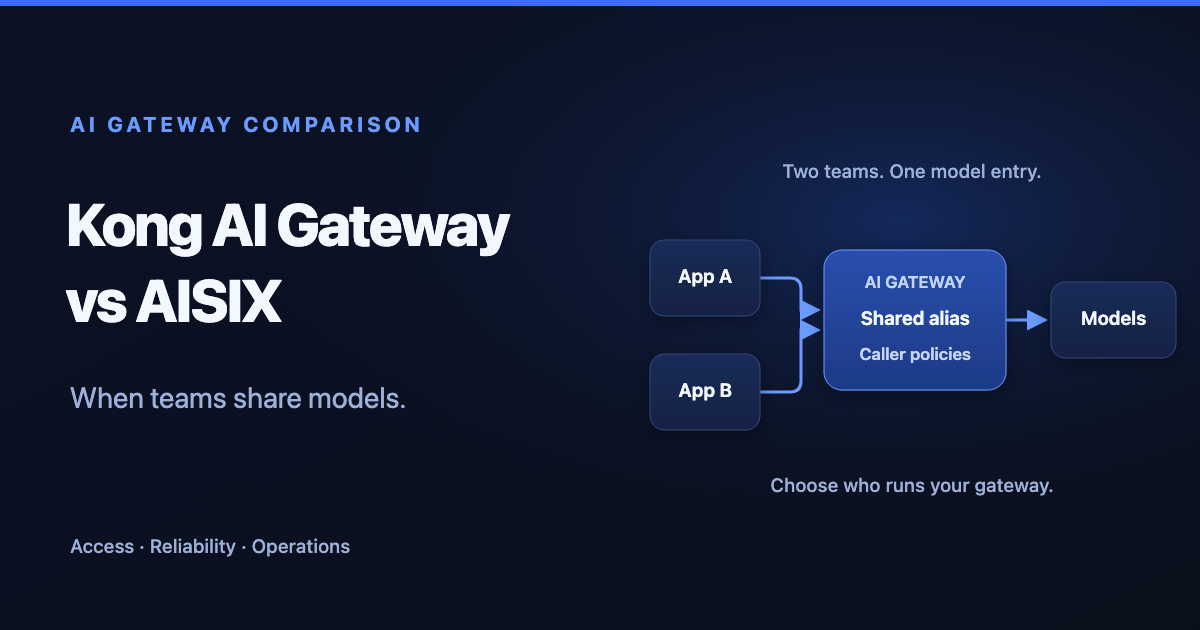
## [Kong AI Gateway vs AISIX: Which Gateway Fits When Teams Share AI Models?](https://api7.ai/blog/kong-ai-gateway-vs-aisix)
[](https://api7.ai/blog/litellm-migration-aliases-inference-parameters)
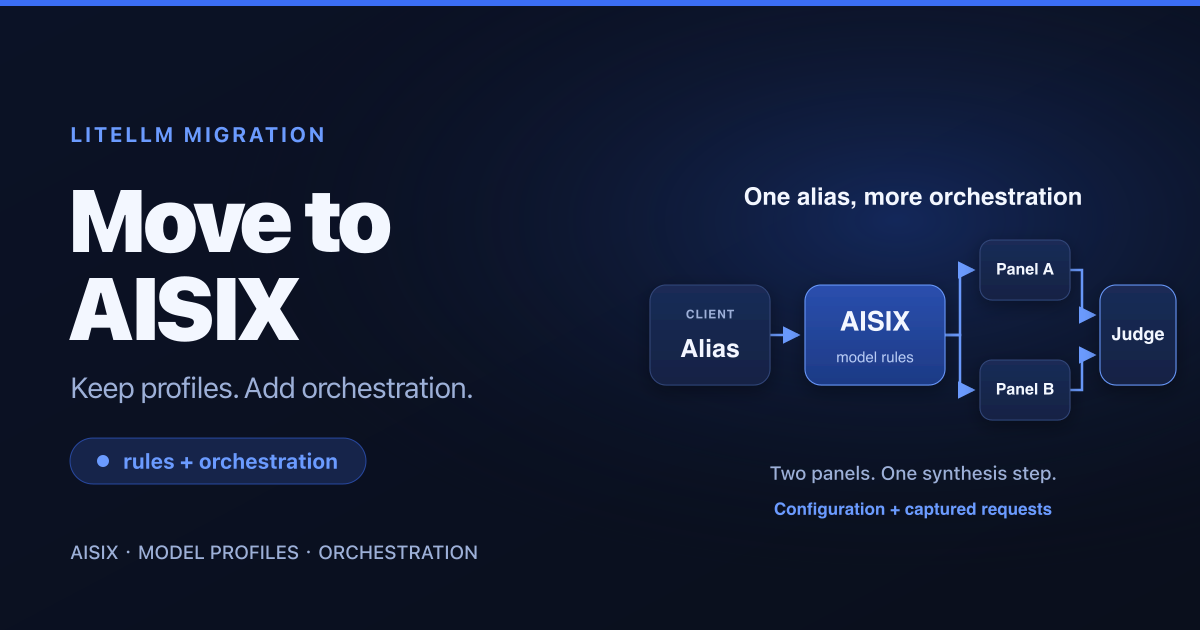
## [Migrating from LiteLLM to AISIX: Keep Model Profiles, Add Gateway Orchestration](https://api7.ai/blog/litellm-migration-aliases-inference-parameters)
Table of Contents
- [Quick Answer](#quick-answer)
- [Key Takeaways](#key-takeaways)
- [Why Coding Models Change Gateway Requirements](#why-coding-models-change-gateway-requirements)
- [The $3,000/Month Problem](#the-3000month-problem)
- [Enter Qwen3-Coder-Next: The Game Changer](#enter-qwen3-coder-next-the-game-changer)
- [Technical Specifications](#technical-specifications)
- [Benchmark Performance](#benchmark-performance)
- [The Training Secret](#the-training-secret)
- [The Economics: Cloud vs. Local](#the-economics-cloud-vs-local)
- [Cloud API Costs (Claude/GPT-4)](#cloud-api-costs-claudegpt-4)
- [Local Model Costs (Qwen3-Coder-Next)](#local-model-costs-qwen3-coder-next)
- [The Hybrid Sweet Spot](#the-hybrid-sweet-spot)
- [Architecture: Multi-LLM Routing with AI Gateway](#architecture-multi-llm-routing-with-ai-gateway)
- [Routing Logic](#routing-logic)
- [Step-by-Step: Building a Hybrid AI Gateway](#step-by-step-building-a-hybrid-ai-gateway)
- [Step 1: Deploy Apache APISIX](#step-1-deploy-apache-apisix)
- [Step 2: Configure Cloud Provider Route](#step-2-configure-cloud-provider-route)
- [Step 3: Configure Local Model Route](#step-3-configure-local-model-route)
- [Step 4: Configure Smart Routing with Fallback](#step-4-configure-smart-routing-with-fallback)
- [Step 5: Test the Setup](#step-5-test-the-setup)
- [Real-World Impact: Before and After](#real-world-impact-before-and-after)
- [The Multi-Model Future](#the-multi-model-future)
- [Next Steps](#next-steps)
- [Conclusion](#conclusion)
- [FAQ](#faq)
- [What is Qwen3-Coder-Next?](#what-is-qwen3-coder-next)
- [Do AI agents need an AI Gateway?](#do-ai-agents-need-an-ai-gateway)
- [How does an AI Gateway help Qwen3-Coder-Next deployments?](#how-does-an-ai-gateway-help-qwen3-coder-next-deployments)
- [What should I read next?](#what-should-i-read-next)
## Related Posts
[](https://api7.ai/blog/llm-routing-differential-testing)
Technology
November 16, 2026
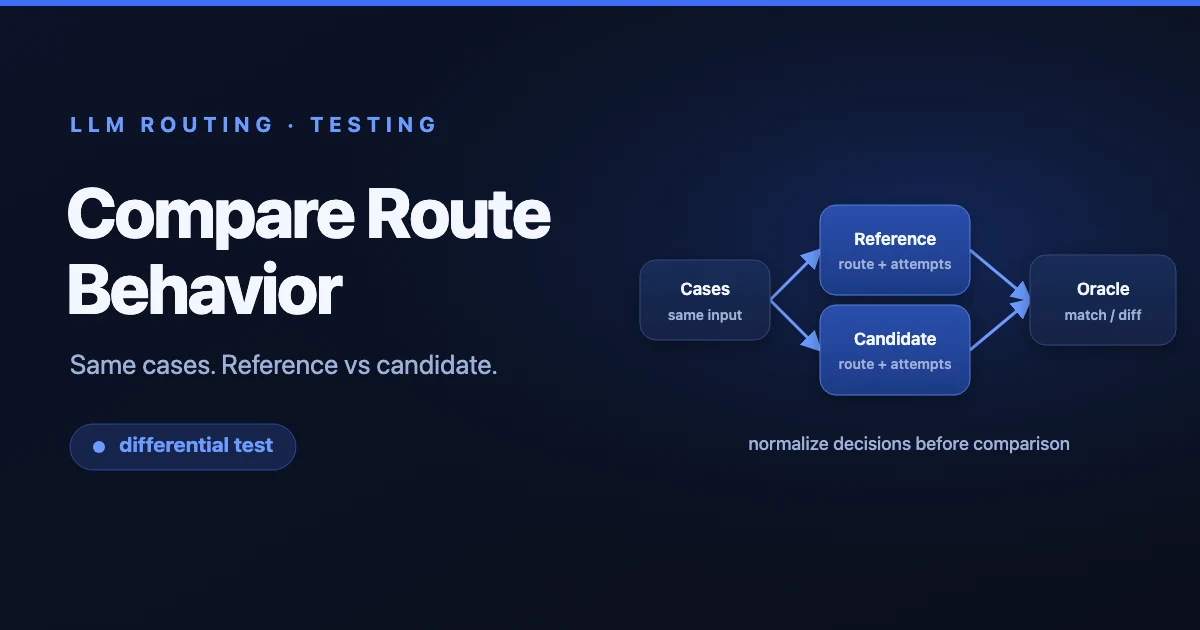
#### [How to Differential-Test LLM Routing Changes](https://api7.ai/blog/llm-routing-differential-testing)
Build a behavior contract for an LLM gateway router, compare old and new decisions, and catch retry, fallback, streaming, and side-effect regressions.
[AI Gateway](https://api7.ai/tags/ai-gateway)
[LLM Routing](https://api7.ai/tags/llm-routing)
[Testing](https://api7.ai/tags/testing)
[](https://api7.ai/blog/ai-gateway-configuration-change-runbook)
Technology
November 9, 2026
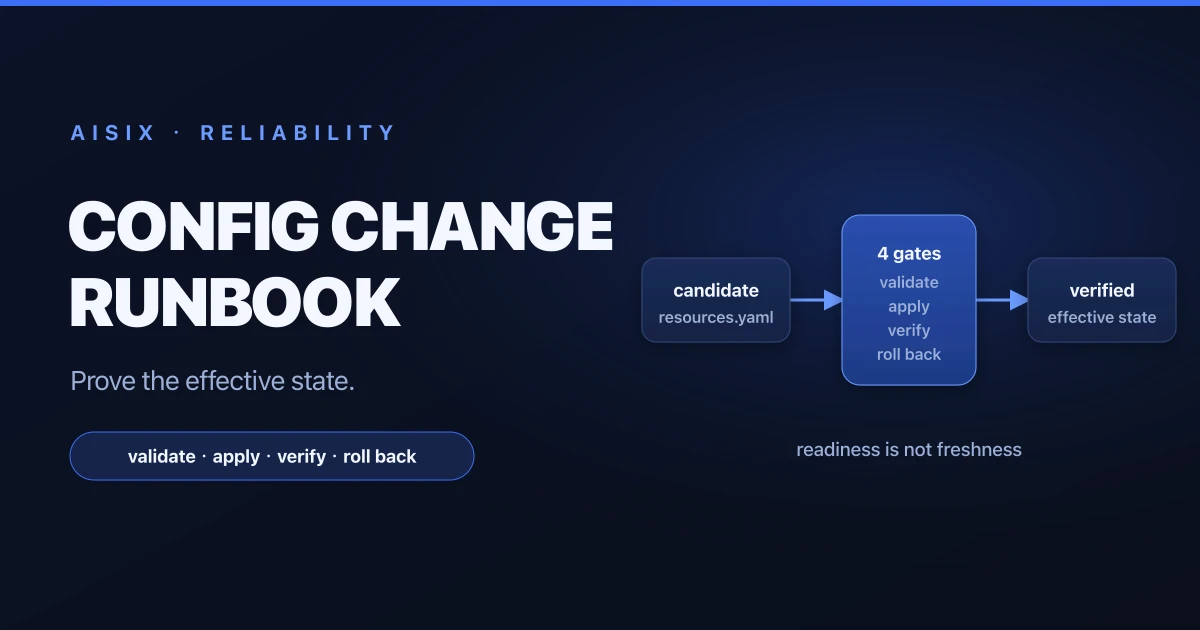
#### [AI Gateway Configuration Changes: Validate, Reload, Verify, and Roll Back](https://api7.ai/blog/ai-gateway-configuration-change-runbook)
Use a four-gate runbook to validate an AI gateway configuration, apply it safely, prove the effective state, and roll back without confusing readiness with freshness.
[AI Gateway](https://api7.ai/tags/ai-gateway)
[AISIX](https://api7.ai/tags/aisix)
[Platform Engineering](https://api7.ai/tags/platform-engineering)
[](https://api7.ai/blog/self-hosted-ai-gateway-kong-litellm-aisix)
Technology
November 9, 2026
#### [Kong vs LiteLLM vs AISIX: Choosing a Self-Hosted AI Gateway](https://api7.ai/blog/self-hosted-ai-gateway-kong-litellm-aisix)
Compare Kong, LiteLLM and AISIX for self-hosted AI gateways: deployment dependencies, licensing, shared quotas and the path to centralized management.
[AI Gateway](https://api7.ai/tags/ai-gateway)
[AISIX](https://api7.ai/tags/aisix)
[LiteLLM](https://api7.ai/tags/litellm)